The Violin Between the Concert Hall and the Microphone
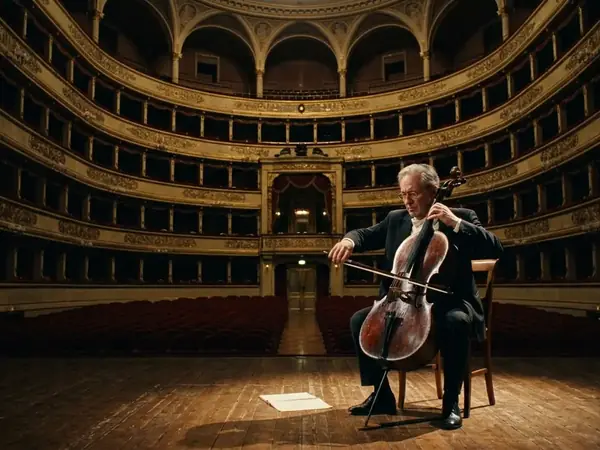
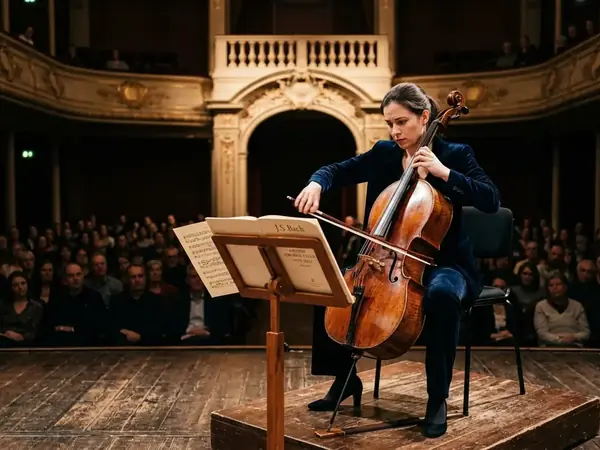
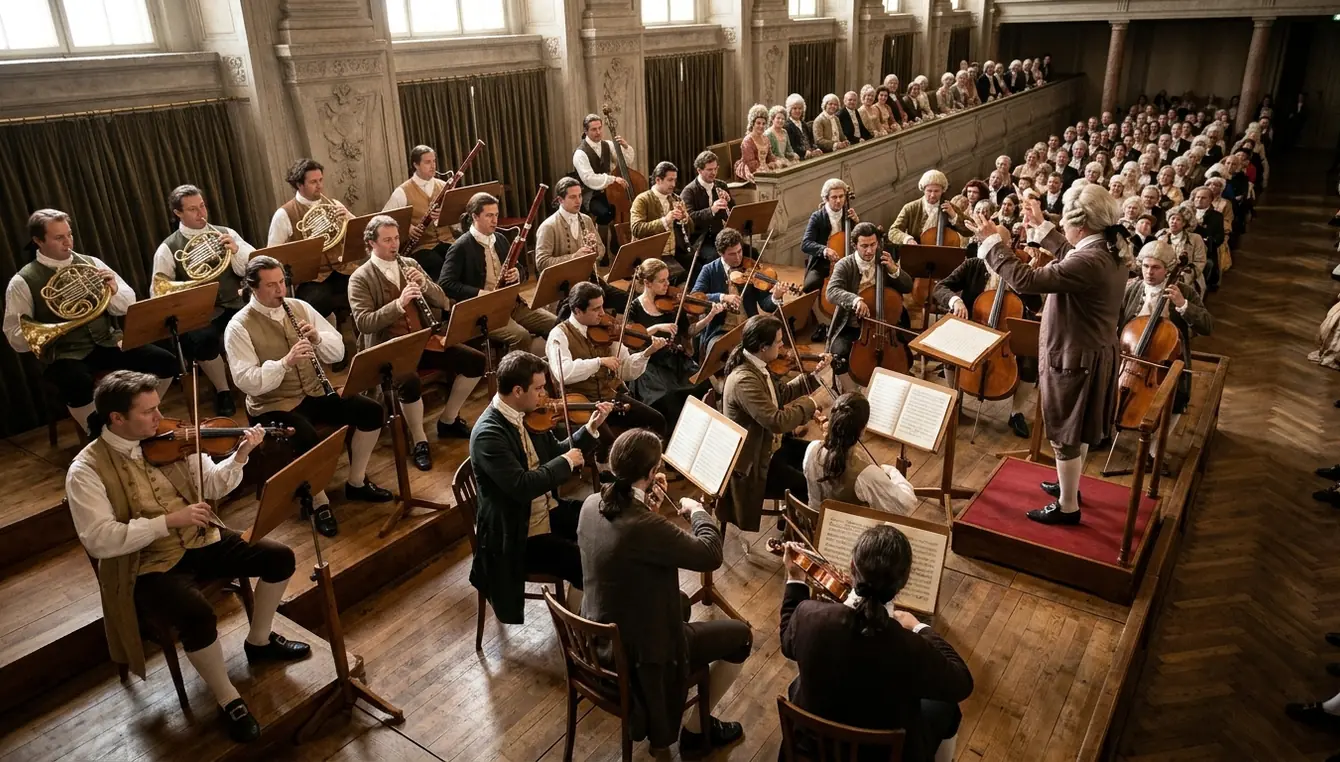
From a middle-row concert seat, a violin arrives wrapped in its surroundings. The first edge of a bow stroke meets reflections from the room; the preceding note still hangs above the orchestra. Onstage, the soloist raises the bow, and the hall's architectural scale gives the gesture a visible destination.
The expansion of nineteenth-century orchestral concert culture made projection a practical concern. Larger audiences and increasingly substantial orchestral textures required violinists to carry a musical line across considerable distances. The listener received the combined effect of instrument, ensemble, and building.
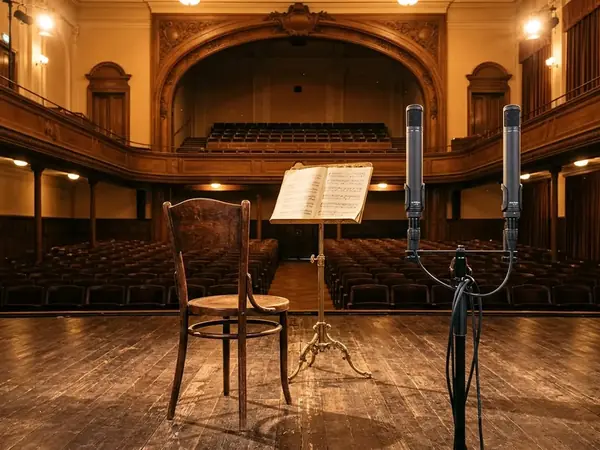
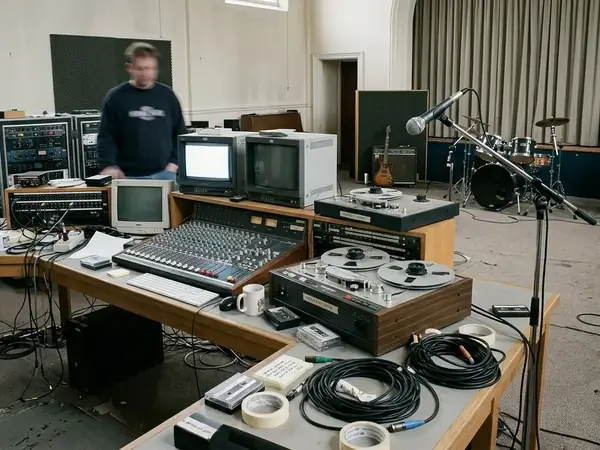
Recording introduced other listening positions. Early acoustic recording belongs to a different technical history from the later emergence of commercially important minimal-microphone stereo. The latter allowed a small microphone array to preserve spatial relationships while placing the listener, perceptually, much nearer the performers.
Distance alone does not blur articulation. Direct sound takes time to travel, but a delayed arrival can retain a clear attack. The overlap matters: reflections arrive after the direct sound, while reverberant energy from earlier notes continues beneath the next onset. That overlap can soften the perceptual boundary between bow strokes.
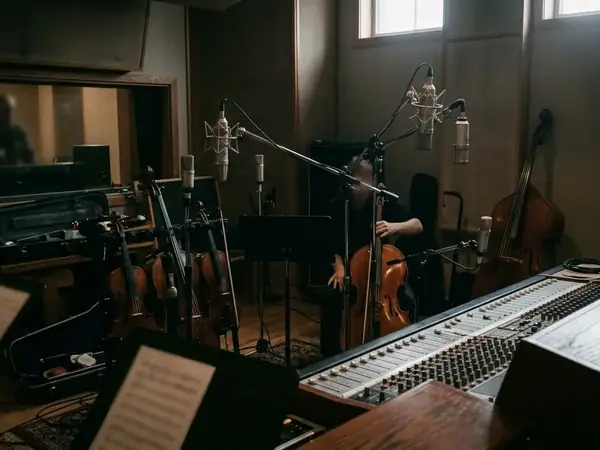
A microphone a few feet from a violin receives a different balance of direct and reverberant sound from a middle-row listener. Its height and angle also matter because the instrument radiates through its vibrating structure in a frequency-dependent pattern. The f-holes provide only part of that acoustic picture.
For the home listener, the change can feel intimate—horsehair catching the string becomes part of the musical foreground. That perspective offers a particular account of the performance, with different proportions from the grandeur of the hall.
Following Bow Contact Into Tone and Release
Begin with a sustained note. Its apparent simplicity contains a sequence: frictional onset, stable pitched tone, changing tonal density, and release into the recording venue. Well-resolved audiophile recordings make those stages easier to follow without requiring the listener to isolate every incidental sound.
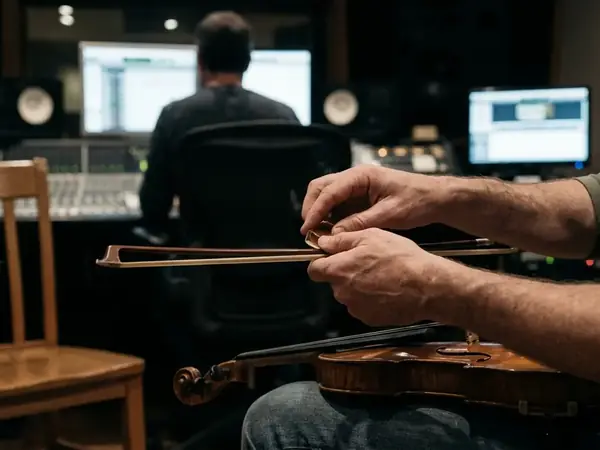
Rosin supports the stick-slip interaction between hair and string: the bow alternately grips and releases the string. At the beginning of a note, a brief frictional component may precede a stable pitch. Listen for how quickly that transition settles and whether the resulting tone sustains the phrase's intended character.
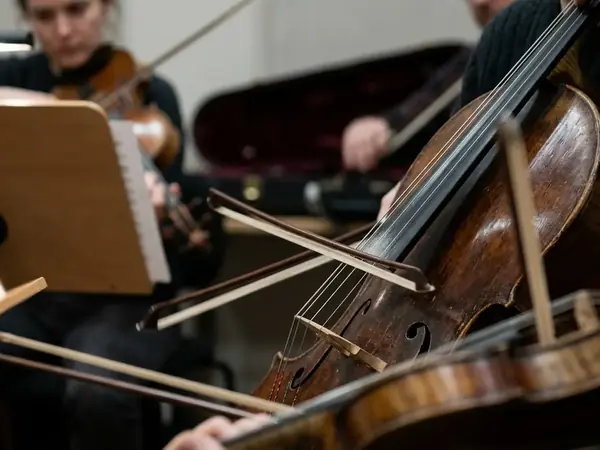
Next, follow a bow change. A continuous line requires the player to coordinate bow speed, contact point, and force. The frog lies nearest the hand; the tip lies farthest away. Maintaining tonal continuity along that span requires adjustments in leverage and contact, even when the audible result seems effortless.
Treat the sound as evidence of phrasing before assigning it to a particular movement of the hand. A finished recording alone cannot establish the player's exact bow-force adjustments, so listen for continuity, emphasis, and tonal change rather than diagnosing technique from one accent.
The left hand supplies another layer. Vibrato speed concerns how rapidly pitch oscillates; width concerns the breadth of that excursion. Attend to them separately. A shift may connect two pitches audibly, while a settled arrival can change the emotional weight of a harmony.
At the phrase ending, distinguish the player's taper from the room's tail. The first belongs to the shaping of the note; the second continues after active excitation ends. Within the archival focus of John Marks Records, this distinction gives classical insights a concrete listening purpose: preserving the relationship between instrumental timbre and acoustic space. Purist placement seeks that relationship without giving every small gesture an artificial spotlight.
Separating the Soloist's Gesture From the Audible Phrase
A lifted torso or broad bow gesture can make a climax appear more forceful. Such movement belongs naturally to performance, and it can guide attention toward the phrase. Yet the acoustic emphasis reaching a distant seat may take a subtler form.
Three questions help separate those effects. Does the sound grow stronger? Does its spectral balance become brighter? Does the performer stretch the timing? Each can produce emphasis, and each deserves a separate hearing. A dramatic release may coincide with a long resonance, a short cutoff, or a gentle taper.
For a practical comparison, select a passage from an existing performance video that contains one clear climax. Hear it with the image visible, then replay it with the screen hidden and playback gain unchanged. Write down where the phrase seems to peak before restoring the image.
This exercise gives stage presence its proper place alongside acoustic phrasing. With the visual cue removed, attention can settle on pitch arrivals, rhythmic pulse, and the architecture of the line. Featured artists may then reveal a restraint or flexibility that a conspicuous gesture had overshadowed.
A Repeatable Listening Sequence for Solo Violin and Quartet
Set the Room Before the Movement
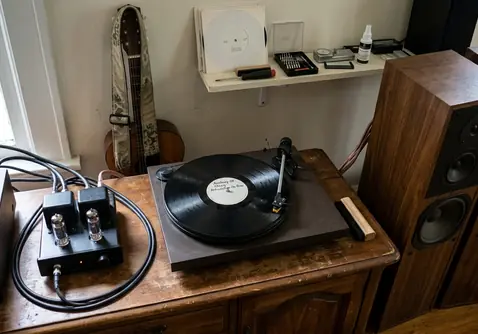
Begin with the speakers and listening seat forming an approximately equilateral triangle. Adjust speaker toe-in symmetrically while repeating a short passage. Retain the position that gives a stable central image and distinct ensemble positions, then leave it unchanged during the listening sequence.
Listen to the quiet room before playback. Reduce avoidable ventilation or appliance noise. Set gain with a strong passage, then return to the opening: quiet bow contact and full tone should retain a convincing contrast. Enlarging close-recorded friction through extra volume changes apparent scale rather than recreating concert-hall projection.
Give Each Pass One Task
- Follow articulation. Hear the complete movement, attending to attacks, bow changes, and the connection between successive notes.
- Follow pitch and color. Repeat the movement for intonation, shifts, and changes in vibrato speed or width. Note a revealing playback timestamp afterward.
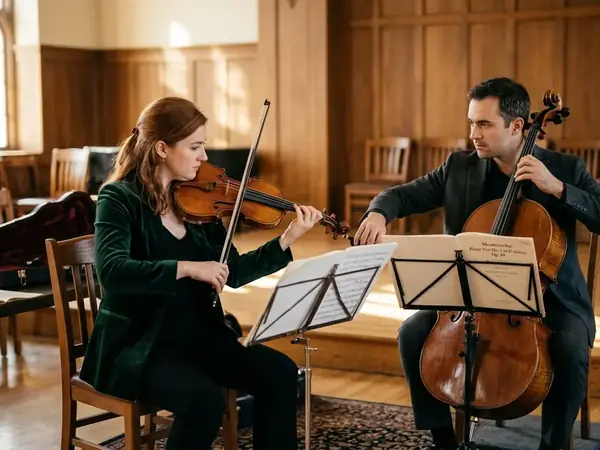
- Follow harmony into the room. Hear how tension develops between parts and how their releases enter the venue's decay. In a quartet, track the exchange between the leading voice and its supporting lines.
Late in the evening, the listener cues the opening bars of a solo Bach partita. The speakers remain untouched. A breath precedes the phrase; horsehair catches the D string, and the brief friction settles into a note that blooms through the recorded room.