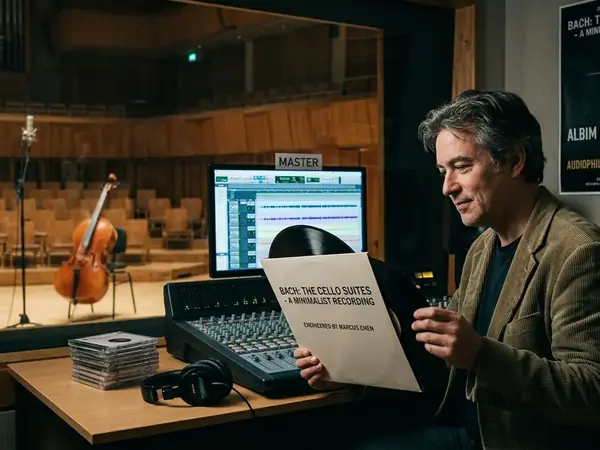
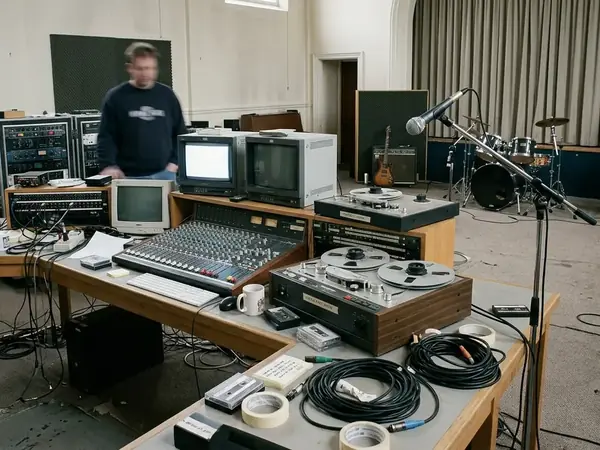
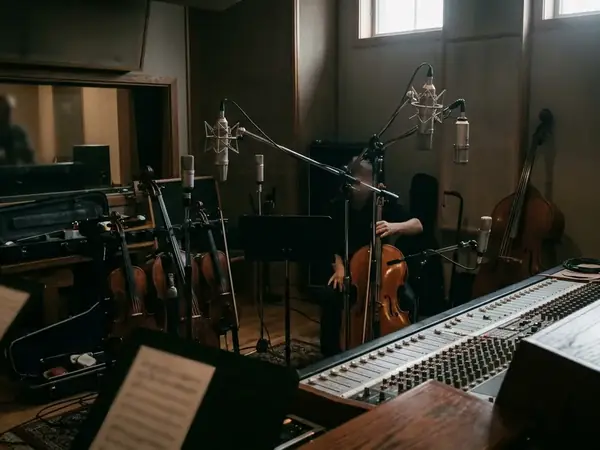
Mastering for audiophile classical sound begins with a disciplined question: what did the ensemble produce in the hall, and what can the chosen medium carry without exaggeration?
For a string quartet, concerto, or recital program, that question is not decorative. It governs every equalizer move, every gain decision, every pause between movements, and every final rendering choice. The mastering engineer sits at the last technical threshold between the mixing console and the listener's room, where Arturo Delmoni's violin tone or Nathaniel Rosen's cello line must remain musical under close scrutiny.
Contents
- The Critical Gap Between Mix and Playback
- Analyzing the Acoustic Space and Dynamics
- Building the Audiophile Signal Chain
- The Step-by-Step Mastering Workflow
- Scope and Limitations of Mastering
- Final Delivery: Lacquers, DSD, and High-Res
The Critical Gap Between Mix and Playback
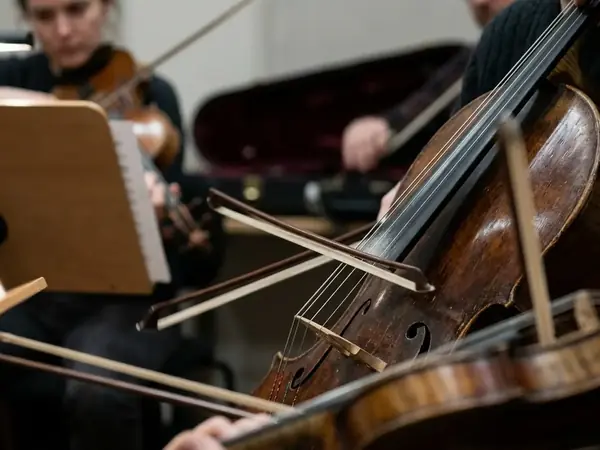
In the hall, a violin note blooms outward before it is understood as pitch. The bow sets the string in motion, the instrument body colors the sound, and the room returns its own answer a fraction later. On a revealing playback system, that sequence can either feel coherent or strangely flattened.
The mastering engineer does not begin by asking how loud the recording should be. The first division is more basic: the acoustic reality of the performance on one side, the constraints of the release medium on the other.
Why Classical Masters Are Judged Differently
Commercial pop mastering often accepts density as an aesthetic goal. Classical mastering, especially for audiophile releases, treats contrast as musical grammar. A movement may need to remain quiet for long enough that the listener leans in, then open into a fortissimo without sounding clamped or theatrical.
Initial evaluation is typically done at a calibrated moderate monitoring level around 80 dB SPL, then checked at lower late-evening levels in the mid-60 dB SPL range. The lower pass matters. If phrasing and hall decay vanish at that level, the master may be depending on volume rather than balance.
For high-fidelity string recordings, the engineer normally compares the full mix against at least one untouched reference export before any processing. The comparison should run in roughly 8-15 minute uninterrupted listening passes, not only in short loudness-matched clips. A clip can reveal a resonance. It rarely reveals whether a sonata movement breathes.
Summary: The mastering engineer is the final bridge between the recorded mix and the audiophile listening room, but the bridge must not become a new performance.
Analyzing the Acoustic Space and Dynamics
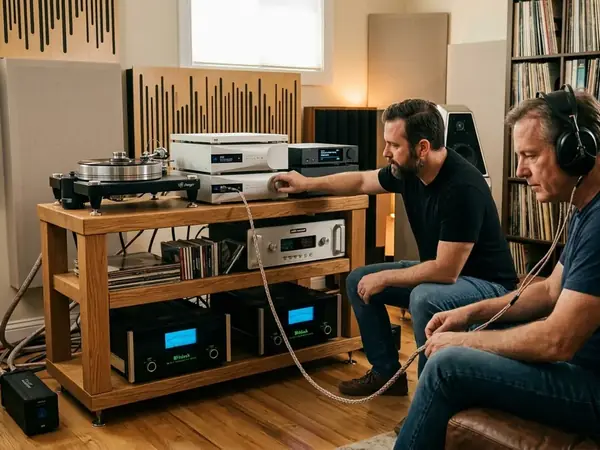
The listening room is part of the measuring chain, not a pleasant backdrop. Before tone is adjusted, the engineer verifies that the stereo image holds steady at the chair. Violins should not pull left on one phrase and drift right on the next unless the recording itself contains that movement.
Critical Listening in Blocks
A reliable session is paced, based on creative process rather than the clock alone. Critical listening is normally divided into roughly 20-35 minute blocks with 5-10 minute rest intervals, because fatigue first affects judgment in the 2-6 kHz region. That is the region where violin sheen, rosin edge, and glare can become easy to confuse.
During the first block, the engineer listens for spatial truth. Does the cello have body in the room, or only low frequency weight? Does the viola occupy a believable middle position? Does the first violin project without becoming a separate object pinned to the speaker?
String imaging checks focus on three practical regions: the roughly 180-700 Hz body range, the 2-5 kHz bow-presence range, and the upper-air band above about 8 kHz. Processing moves should be small enough that the instrument identity remains intact. If an adjustment makes the bow easier to hear but the wooden body less credible, the adjustment has likely solved the wrong problem.
Preserving Venue Decay
The purist philosophy is not romantic nostalgia. It is an engineering constraint: natural decay must remain attached to the direct sound.
Venue decay is often assessed by looping phrase endings of about 6-18 seconds, especially after final chord releases, pizzicato passages, and quiet page-turn-adjacent ambience. These are the places where artificial fades, heavy noise shaping, and nervous editing become obvious. A good hall tail does not simply get quieter; it changes density as it recedes.
Note: A quartet recording captured with a main stereo pair in a resonant hall may need less low-frequency correction than a close-miked studio session, even when both feature the same instruments.
Building the Audiophile Signal Chain
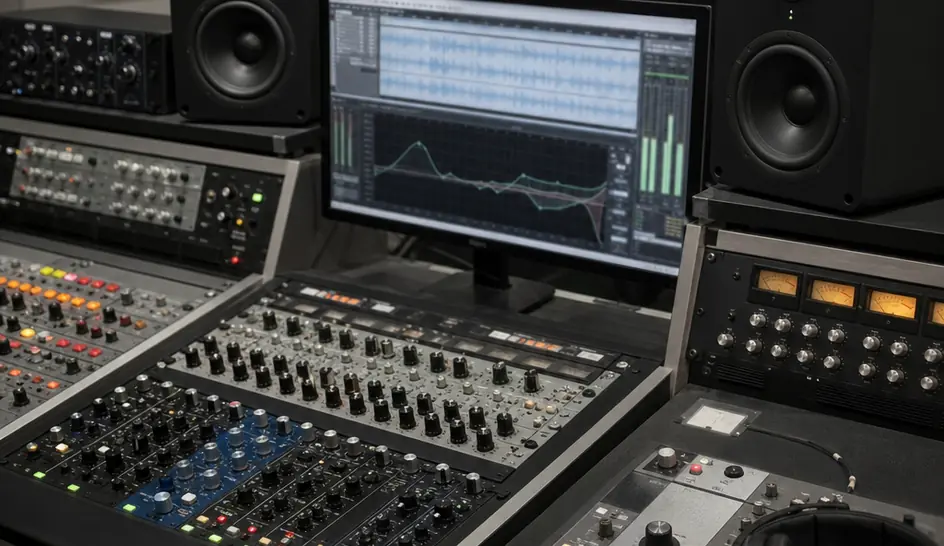
Two mastering rooms may contain equally respected equipment and still call for different chains. A dry, close quartet may need a transparent equalizer and no compressor. A lush hall recording with lower-mid bloom may benefit from a carefully chosen analog insert that tightens the image without bleaching the tone.
The chain is chosen after the recording has revealed its weakness, not before.
Analog, Digital, and the Case for Restraint
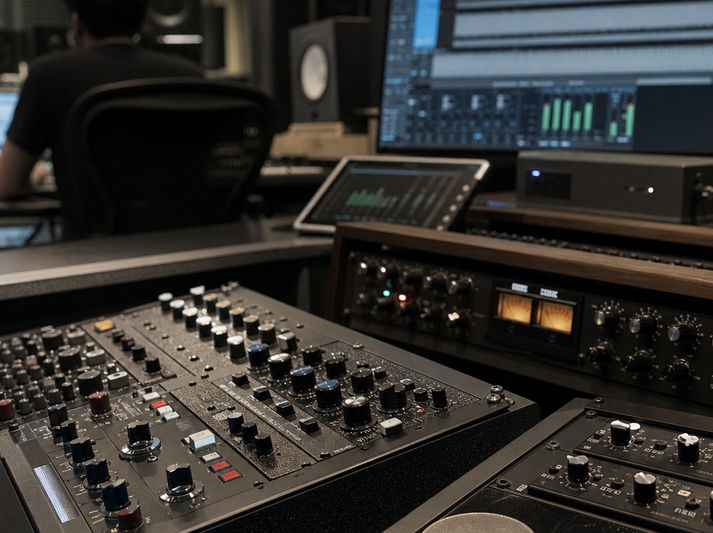
Analog inserts are commonly kept to one or two devices for purist classical work. Total gain staging must be reviewed so that converters are not being hit near full scale during fortissimo passages. The sound of the insert is never separate from the level at which it is used.
Custom-built or heavily modified equalizers and compressors can be useful, but only when their behavior is predictable at very small settings. Equalization moves on audiophile string material often stay within about half to 2 dB per band. Broad bandwidth settings usually serve tonal balance; narrow cuts are reserved for identifiable room or microphone resonances.
Compression requires particular caution. When used, attack windows in the 20-80 ms range can leave bow articulation intact, while release behavior should be adjusted by ear over complete musical phrases rather than drum-like transient tests. A compressor that flatters a single accent may still disturb the arc of a long crescendo.
Matching Equipment to Instrument Character
The engineer listens for the tonal center of the instrument first. Arturo Delmoni's violin demands a different kind of protection than Nathaniel Rosen's cello; the violin can be injured by aggressive upper-mid emphasis, while the cello can lose its speaking quality if lower-mid warmth is carved too deeply.
A master that sounds more detailed after a lift pushing 2 dB in the upper mids may fail on a revealing tweeter system because violin bow noise becomes detached from the instrument body. The preferable move may be smaller, lower, or not an equalizer move at all.
The Step-by-Step Mastering Workflow
The workflow starts with documentation of the source: file resolution, peak headroom, edit joins, movement order, and producer notes. Process documentation supports a simple rule: no processing decision should be made before the engineer can describe the source accurately.
1. Establish the Untouched Reference
The engineer first listens without touching the signal chain. Notes should identify repeatable problems, not first impressions. If a resonance appears once, it may be orchestration or room behavior; if it appears across several phrases and movements, it becomes a candidate for correction.
2. Correct Resonance Without Revoicing the Instrument
A practical pass may start with a broad half-to-1 dB reduction around a persistent lower-mid resonance, often somewhere in the roughly 180-320 Hz region for small halls or close string ensembles. The correction must then be rechecked against cello warmth and viola body.
This is the point where many heavy-handed masters lose their dignity. Removing mud is useful. Removing the instrument's chest is not.
3. Manage Macro- and Micro-Dynamics
Macro-dynamics concern the movement-scale contrast between quiet and loud passages. Micro-dynamics concern the life inside a phrase: bow pressure, inner-voice motion, the slight relaxation after a cadence. Classical masters are commonly allowed to retain wide peak-to-average contrast, with the decision target set by natural crest behavior across movements rather than by a fixed streaming loudness target.
Micro-dynamic edits are auditioned over phrase lengths of about 12-45 seconds. The engineer listens for whether inner voices remain intelligible during crescendos, not simply whether a gain-reduction meter looks calm.
4. Sequence for Musical Time
Track spacing is not administrative. It controls how the listener resets attention.
For classical programs, short pauses of about 3-5 seconds often suit related movements. Longer pauses of roughly 6-12 seconds may be needed between works. Manual adjustment remains essential when a venue tail needs to resolve naturally; the correct pause is sometimes the one that lets the room finish speaking.
Quick Tip: Confirm the source resolution, channel count, sample rate, bit depth, and exact movement order before processing. Then make the first full pass with no signal-chain changes.
Scope and Limitations of Mastering
The boundary is drawn by asking whether a correction restores what is already present or invents something the recording never captured. Mastering can refine perspective. It cannot move a microphone that was placed too close to a violin.
The Do No Harm Principle
The strongest mastering decisions often sound modest in isolation. A slight reduction in congestion, a steadier center image, a more patient fade, a better-spaced transition: these changes serve the performance because they do not announce themselves.
Dynamic expansion is treated cautiously. Expanding quiet passages by more than a small audible margin can raise chair noise, edit ambience, and hall rumble faster than it restores natural contrast. Over-processing reveals itself on sustained string tones first: vibrato begins to pulse unnaturally, ensemble depth flattens, and reverberation tails detach from the direct sound.
In this repertoire, mastering can preserve venue cues only when the source capture already contains coherent direct sound and decay; close-miked edits with artificial reverb impose a ceiling.
Full-Program Review
A do no harm review normally includes at least one full-program listen after processing, followed by spot checks of the loudest climax, the quietest ending, and a mid-level lyrical passage. These three checks expose different faults. The climax tests strain. The ending tests noise and decay. The lyrical passage tests whether the musical line still feels human.
The highest fidelity is usually achieved when the mastering engineer intervenes as little as possible, but with enough precision that the listener no longer hears the medium fighting the performance.
Final Delivery: Lacquers, DSD, and High-Res
Delivery decisions are made backward from the format. A lacquer master asks different questions than a high-resolution PCM file, and DSD asks for different preparation again. The approved sound is not fully approved until it has survived the requirements of its release path.
Vinyl Lacquers
For lacquer cutting, the engineer checks side length, inner-groove difficulty, bass width, and edgy string harmonics that can become brittle near the end of a side. Vinyl sides for wide-dynamic classical material are usually planned more conservatively than loud pop sides, with practical side lengths often kept in the roughly 16-22 minute range when high level, bass stability, and inner-groove string tone are priorities.
Vinyl preparation can require narrower low bass and more conservative side planning, while a high-resolution digital master can often retain wider stereo ambience and longer unshaped decay.
DSD and High-Resolution PCM
High-resolution PCM delivery commonly uses 24-bit files at 88.2 kHz, 96 kHz, 176.4 kHz, or 192 kHz when the production path supports it. DSD delivery requires particular care because most editing and level changes are easier before the final render. Terminology and delivery expectations should be consistent with the Audio Engineering Society guidelines on high-resolution audio.
Quality Control as Musical Listening
Final QC is a sequence of technical and musical checks: file integrity, start and end trims, inter-track spacing, peak behavior, channel orientation, metadata spelling, and complete playback of at least the approved master sequence. Reference listening should include varied audiophile playback systems, because one system may flatter warmth while another exposes glare.
At John Marks Records, the release format is treated as part of the interpretation. The final master should not merely measure cleanly; it should let the hall, the instrument, and the performer arrive in the listener's room with their proportions intact.