The Modern Crisis of Sterile Strings
Start with the sound, not the complaint. Pull up a handful of exposed violin passages issued from the late 2010s into the early 2020s — the slow introductions, the cantabile second themes, the unaccompanied cadential moments where a player has nowhere to hide. Listen for one thing: does the tone change as the note lives, or does it arrive fully formed and stay there?
In a striking amount of contemporary, conservatory-influenced recording, it stays there. The note speaks, presents its full brightness instantly, and holds at a glossy upper-mid presence that never quite moves.
This is the homogenized sound, and it tends to announce itself through three repeatable signs. Note starts become very even, almost mechanical. Vibrato narrows its behavior across a long note instead of breathing. And the brilliance concentrates in a fixed band rather than shifting with the changing body resonance of the instrument. None of these are mistakes. They are the audible fingerprint of a training culture that prizes flawless execution above distinct character, reinforced by silent digital editing and close capture becoming routine expectations.
Arturo Delmoni belongs to the other side of that divide. In sustained lines of roughly 5 to 15 seconds, his tone often blooms after the initial bow contact rather than presenting everything at once. That single trait — a sound that develops in real time — marks him as a surviving voice of the Golden Age tradition, where color was never separated from phrasing.
The Mechanics of Delmoni's Signature Tone
It helps to separate the mechanics into three layers: the bow, the left hand, and the friction behavior between them. Each leaves a different audible clue. The bow comes first, because Delmoni's warmth depends on how the string is set into motion before anything else can shape it.
Bow Weight and Contact Point
The decision is not about force. For a warm singing line on the upper strings, the usable contact-point band sits roughly 10 to 20 millimeters from the bridge, and Delmoni lets the bow drift slightly toward the fingerboard as a phrase relaxes. The pressure choice is a controlled settling of the hair into the string — enough weight to start the Helmholtz motion cleanly, then enough release to keep from choking the upper partials.
Watch how the bow is spent, too. A Delmoni-like gesture might use about a third to two-thirds of the bow across a 5 to 10 second sustained phrase, rather than distributing speed evenly across every note. The reserve is deliberate. It leaves room for the line to grow.
Vibrato as a Variable, Not a Default
Today's prevailing habit is a continuous, uniform vibrato applied like a coat of varnish. Delmoni treats it as an expressive variable. A line might open with a restrained shimmer around 4 to 6 oscillations per second and tighten toward a more urgent 6 to 8 at a phrase peak.
The exact rate matters less than the fact that it moves. Variation is the point.
Where the Warmth Actually Comes From
The characteristic warmth is born in repeated stick-slip cycles between rosined hair and string. Too little bite and the tone collapses into a pale whistle. Too much downward pressure and the fundamental pinches, the overtone spread narrows, and the sound turns hard. Delmoni's playing lives in the productive zone between those extremes, where the friction generates harmonic richness rather than noise. You can read the broader physics of acoustic resonance of the violin body if you want the underlying model — but the ear gets there first.
Precision vs. Resonance: A Necessary Debate
Grant the strongest modern objection first, because it is a fair one. Cleaner recordings genuinely do remove distracting bumps, false starts, and uneven attacks. A nervous audition take with three botched entrances is not improved by nostalgia.
The distinction that matters is between an error and an artifact. Useful acoustic information often lives in the first 200 to 600 milliseconds of a note: the initial bow bite, the slight scrape before the core tone locks in, the left-hand shift that prepares an expressive arrival. Strip those away and you have not cleaned the performance — you have removed its evidence of being alive.
A heavily edited solo passage starts to sound unnaturally uniform when phrase units shorter than 3 to 6 seconds get repeatedly replaced, because bow direction, room decay, and vibrato intensity stop developing continuously.
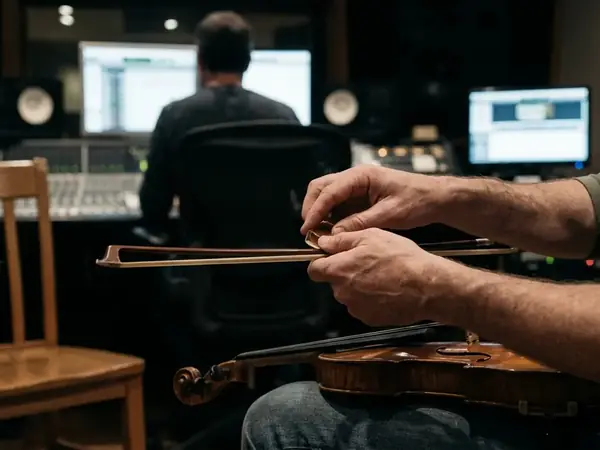
There is a recording dimension to this as well. Close studio capture, somewhere around 30 to 80 centimeters from the violin, emphasizes mechanical detail while quietly erasing the sense of the instrument energizing the room. The body's lower-mid warmth is most persuasive when a listener hears both the direct tone and the early room response within roughly the first 20 to 80 milliseconds after the note speaks. Remove that window and the violin stops sounding like an object in a space.
Note: the defense of acoustic artifact has a limit. In very rapid contrapuntal writing, too much transient noise blurs the line, and no amount of philosophy excuses genuinely unclear articulation. The argument protects living detail, not sloppiness.
Capturing the Uncapturable: The Audiophile's Role
If Delmoni's value lies in overtone bloom, bow grain, and room interaction, the production chain has to preserve those relationships rather than flatten them. The recording argument follows directly from the tone analysis.
Minimalist Placement
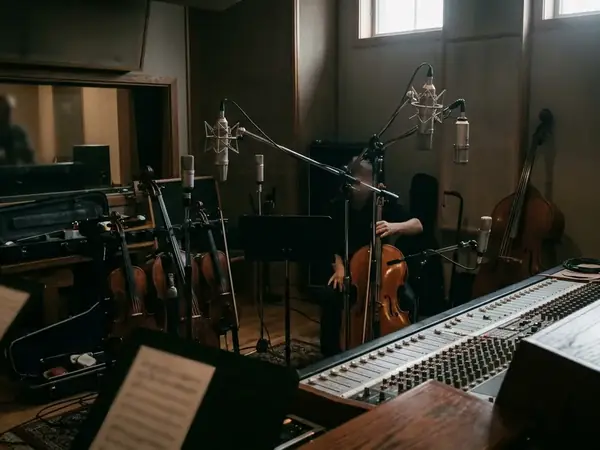
A purist setup for solo violin, or violin with piano, can begin with spaced omnidirectional microphones placed about 1 to 2 meters apart and 2 to 3 meters from the instrument, then adjusted by ear for image width and room bloom. Microphone height around shoulder-to-head level tends to reduce excessive fingerboard scratch while still catching the bow's transient edge.
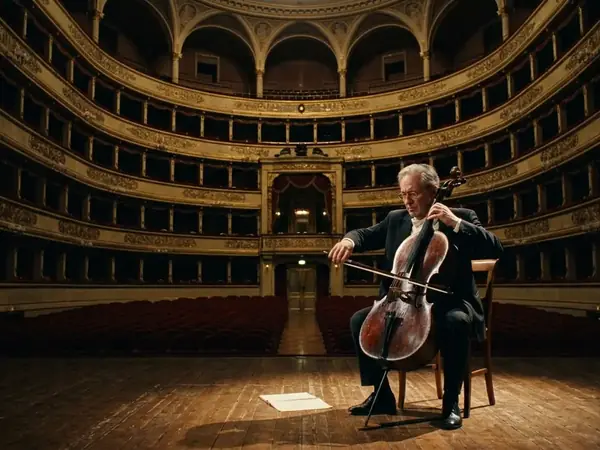
The room itself is part of the instrument. A supportive chamber or recital space for this tone often carries a reverberation time around 1 to 2 seconds. Much shorter and the result sounds forensic; much longer and articulation smears.
The Conversion Chain
For high-resolution capture, 24-bit recording at common high-resolution rates such as 88.2 or 96 kHz gives enough headroom and temporal detail to hold the violin's wide dynamics without aggressive level control. That headroom is not vanity — it is what keeps a floated pianissimo distinct from a pressed expressive peak.
Quick Tip: watch the compressor. Fast compression with attack times under about 10 milliseconds and even modest ratios dulls the bow onset and collapses the very dynamic contrast that defines this playing. Heavy compression and aggressive multi-tracking are, in this context, destructive tools.
Process documentation supports a simpler conclusion than most engineers expect: with Delmoni, the goal is to get out of the way.
The Enduring Legacy of Acoustic Authenticity
Two audiences usually talk past each other here, and Delmoni's approach gives them a shared text. Musicians can learn from his refusal to separate tone from phrasing. Audiophiles can learn that equipment alone never preserves a performance.
For a player, the practical work is concrete. Spend about half an hour on slow-tone practice using single phrases rather than scales alone, changing bow contact point and vibrato speed at specific harmonic arrivals. Tone becomes a decision made at named moments, not a default setting.
For a listener, evaluation needs room to breathe. Use a roughly two- to three-minute passage with sustained violin, soft attacks, and at least one dynamic swell — short hi-fi snippets rarely reveal whether tone actually develops. Set playback once and resist level chasing; in a domestic room, natural violin presence usually becomes credible when musical peaks sit in the low- to high-70s dB SPL at the seat, depending on room and speaker distance.
Then return. Revisit the same passage across a few sessions over the next week or so. If the tone still shows new inner motion rather than merely brightness, the recording is preserving musical information instead of surface polish.
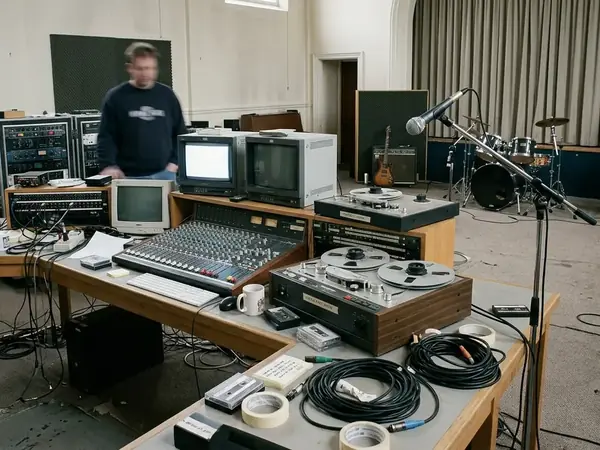
One honest caveat belongs here: a dry teaching-room recording with very short decay can make even a warm player sound thin, and a close-miked pedagogical demonstration may exist only to show fingering or bow distribution, not finished concert tone. Tonal judgment should never rest on close, untreated rehearsal audio alone.
True high fidelity is not finally about the gear. It is about preserving the authentic, human soul of the performance — the bloom, the bite, the breathing room, so the violin keeps speaking long after the session ends.