The Audiophile Quest for Authentic Cello Resonance
Start with the physics, not the praise. A cello pushes its useful low-mid energy through the body of the instrument, while bow noise and finger articulation project from a different plane entirely. Those two sound sources do not arrive at a microphone in the same proportion they reach a player's ear, and that mismatch is where most cello recordings go wrong.
The fundamentals run from roughly 65 Hz at C2 up to about 880 Hz at A5. Much of what listeners call warmth, though, lives higher up in the first several overtones rather than in the lowest fundamental alone. Knowing that changes how you place a microphone.
The real trouble concentrates in a narrow band: 100 Hz to 350 Hz. Room modes, floor coupling, and the distance between instrument and capsule all converge there. Get it wrong in one direction and the cello sounds undernourished; get it wrong in the other and it sounds overlarge, a giant sitting where a single player should be.
Nathaniel Rosen brings a specific tonal signature to this problem. His catalog importance for John Marks Records centers on recordings made after his 1978 Tchaikovsky International Competition gold-medal recognition, and before the label's archival endpoint in 2014. That gives these sessions a defined window rather than an open-ended reissue narrative.
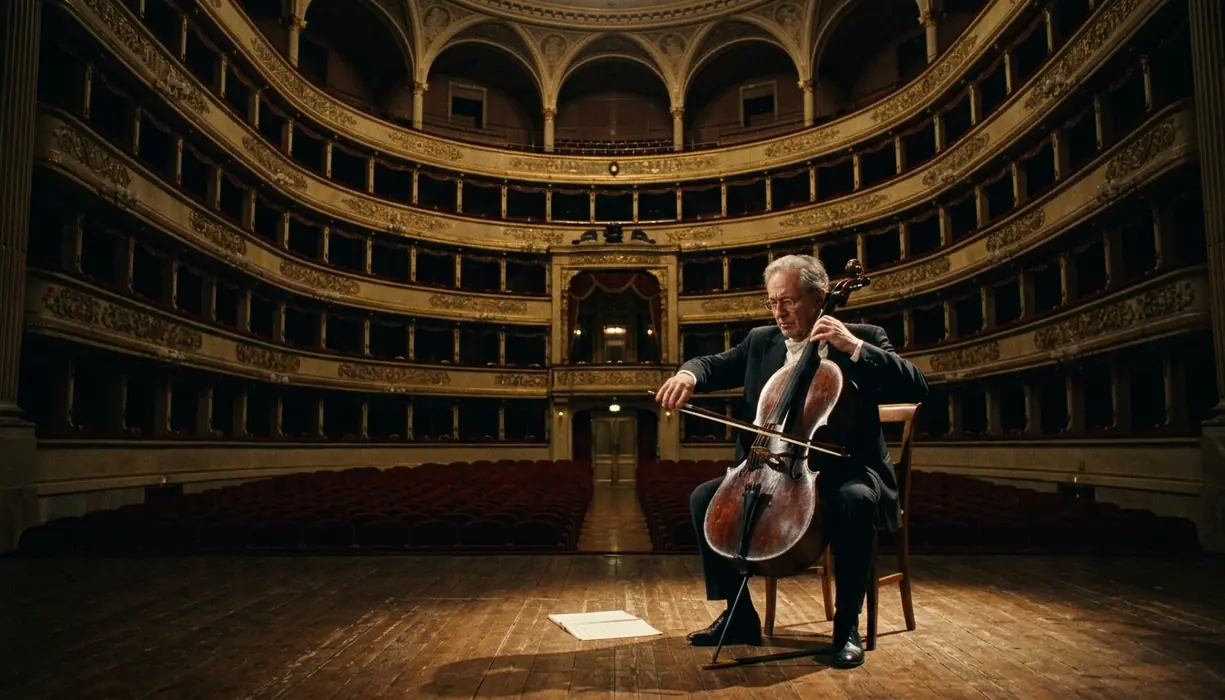
The label's philosophy is straightforward and conservative: prefer an uncolored, natural acoustic space over artificial studio manipulation. The room is part of the instrument. The job is to capture it honestly, not to rebuild it after the fact.
Music for a Glass Bead Game and Key Collaborations
The 1996 sessions are the listening proof for this catalog. They matter because they place Rosen in chamber-scale dialogue rather than isolating him as a purely soloistic source, and chamber balance is a harder, more revealing test of a recording chain.
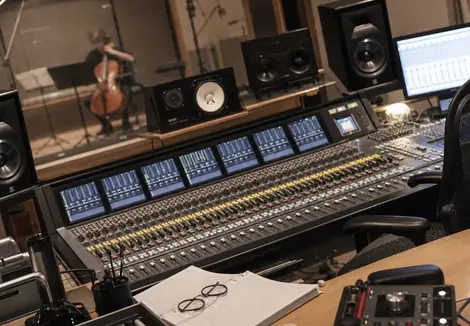
These productions from the 1996 period became reference material rather than later archival compilations. That distinction is worth keeping in mind when you go looking for the originals.
Rosen and Arturo Delmoni
The pairing with violinist Arturo Delmoni on Music for a Glass Bead Game is especially useful for evaluation, and the reason is spectral. Violin presence typically concentrates around 2 kHz to 5 kHz, while cello body tone needs stability lower in the spectrum. When both instruments hold their own register without one smearing into the other, you are hearing a recording that respects the soundstage. The album has earned steady praise on the Audiogon Discussion Forum for exactly this reason.
Doris Stevenson at the Piano
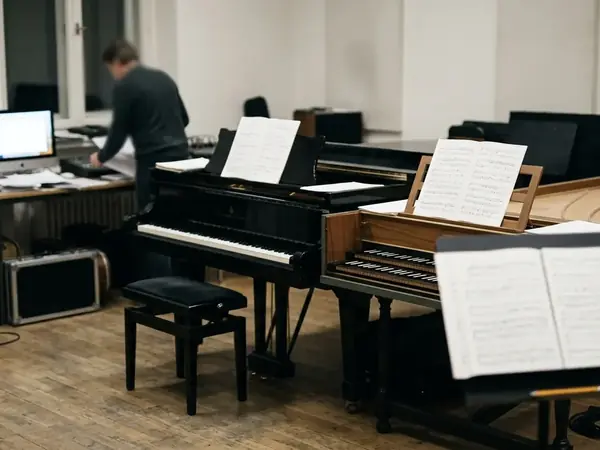
Add featured pianist Doris Stevenson and the balance problem sharpens. Piano transients rise much faster than bowed-string attacks. In passages where a sustained cello line continues under or after keyboard punctuation, the engineering has to protect that sustain from being clipped in the listener's perception.
A believable chamber balance keeps the piano slightly behind or level with the strings in the perceived stage. The instrument's wide soundboard image should never dominate the cello's central sustain.
Note: These recordings reveal the most on systems that reproduce stable low-midrange information without adding cabinet or room bloom. On a system that exaggerates that band, the chamber balance reads as heavier than it actually is.
Sphere Stereo and Surround: The Microphone Techniques
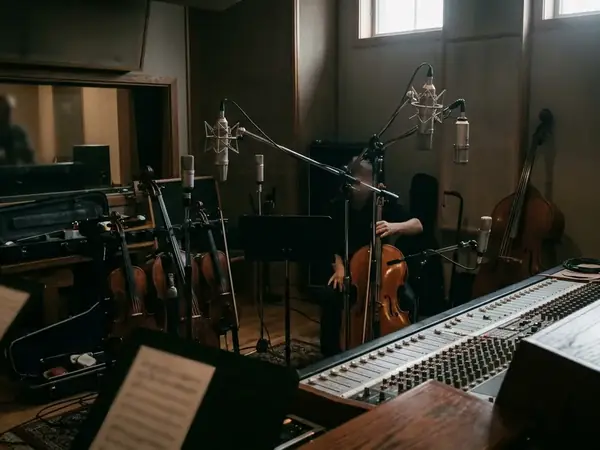
Organize the microphone question around spatial integrity, not brand prestige. A sphere microphone earns its place because it captures interaural timing and level differences in a way that mirrors how a head perceives a room.
The Schoeps KFM 6 is built around an approximately head-sized sphere with two pressure transducers mounted on opposite sides. That geometry preserves natural stereo timing and level cues. Crucially, a sphere of this kind sits at listener-distance rather than bridge-distance, which keeps bow hair, rosin texture, and the lower strings from being blown out of proportion.
The Bruck KFM 360 surround approach extends the same idea. It derives four discrete signals, so front localization and rear ambient information can be handled separately during surround mastering. Front stays front. Ambience stays ambience.
A close-miked cello can sound impressive during a demonstration pushing thirty seconds yet fail on Rosen-style sustained lines because the lower strings become wider than a real instrument and the room disappears.
The anti-bloat decision is operational, and it is a trade. Increase distance until the cello's body and the room agree with each other, then accept slightly less microscopic finger noise in exchange for a coherent acoustic image. That is the bargain these recordings make, and it is the right one for sustained playing.
Digital Tape and 20-Bit Mastering Implementation
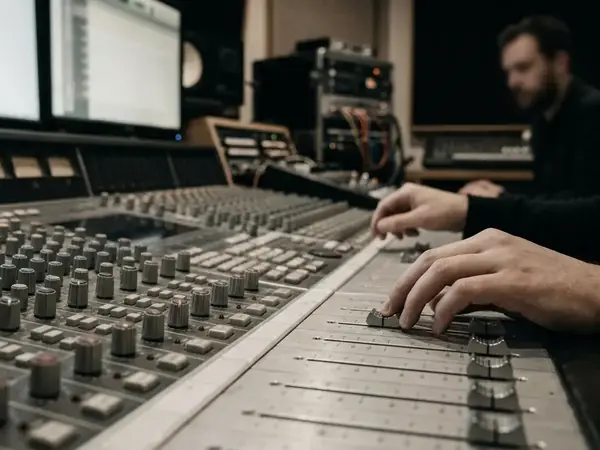
The digital chain follows directly from the microphone array. Once you commit to a four-channel pickup, the recorder's only job is to keep those channels aligned and quiet enough that mastering has something clean to work with.
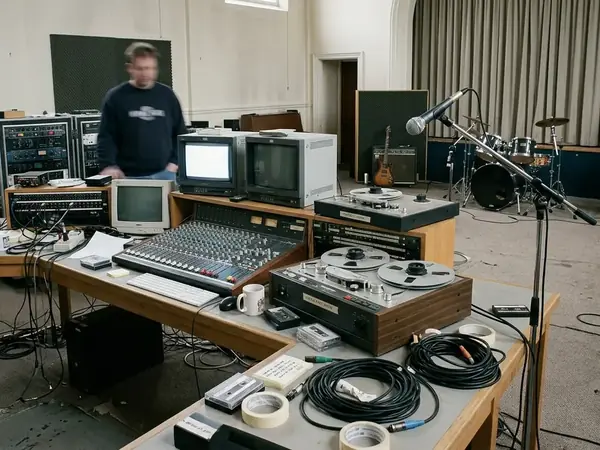
The Nagra-D earned its place in professional location work because it could record multiple digital channels with stable synchronization. For a four-signal array that must stay phase-consistent from capture through mastering, that synchronization is not a luxury. It is the whole point.
Why 20-Bit Mattered
A 20-bit word length offers finer amplitude resolution than the 16-bit compact-disc delivery format. That extra headroom gives the mastering stage more room to preserve quiet hall decay and low-level string resonance before final format constraints take hold. The faintest return from the back of the room is exactly the information that disappears first when resolution runs short.
For a four-signal surround array, the mastering risk goes beyond tonal alteration. The bigger danger is channel misregistration. Small timing or level changes can pull the cello image forward, widen it unnaturally, or turn a gentle hall return into an audible rear-channel distraction.
The DTS discrete surround implementation addressed this by keeping surround information separated at playback rather than relying on matrix decoding. Matrix systems are less predictable for exact image placement, and exact placement was the entire reason for choosing the sphere array in the first place.
Quick Tip: When auditioning a surround master like this, listen first for whether the cello stays centered as dynamics rise. Image drift under load tells you more about the chain than any single frequency-response measurement.
Critical Reception and Archival Legacy
Tie the reputation to traceable milestones rather than broad acclaim. The 1996 sessions fed directly into the following year's critical reception cycle, including a 1997 appearance in Stereophile's Records to Die For context. That places the recording work inside a contemporary, datable moment rather than vague legend.
The label's online sample strategy belonged to the early web audio period, when RealAudio plug-in playback was the common way to share short promotional excerpts. Nobody mistook those streams for full-fidelity delivery. They were invitations, not the recordings themselves.
The catalog's archival span runs 1992 through 2014. That boundary helps collectors separate original-label production history from later secondhand marketplace circulation, which is a practical distinction when provenance affects what you are actually buying.
For modern equipment owners, these recordings stay useful because they stress different parts of a system in different ways. Solo cello exposes low-mid bloom. Violin-cello dialogue exposes image drift and treble glare. Piano-trio textures expose loss of hall decay. One catalog, several diagnostics.
The same surround master can read as natural in a room with controlled sidewall reflections and as rear-heavy in a reflective listening room where ambient channels arrive too prominently.
That last point is the honest qualifier worth keeping: these masters reward a controlled room and can mislead in an untreated one, so judge the recording and your acoustics together rather than blaming one for the other.
Result: The Rosen recordings on John Marks Records solve a real acoustic problem with distance-based sphere miking, a phase-stable Nagra-D capture, and 20-bit DTS surround mastering. The result is a cello that keeps its size, its center, and its room — audible on systems honest enough to show them.