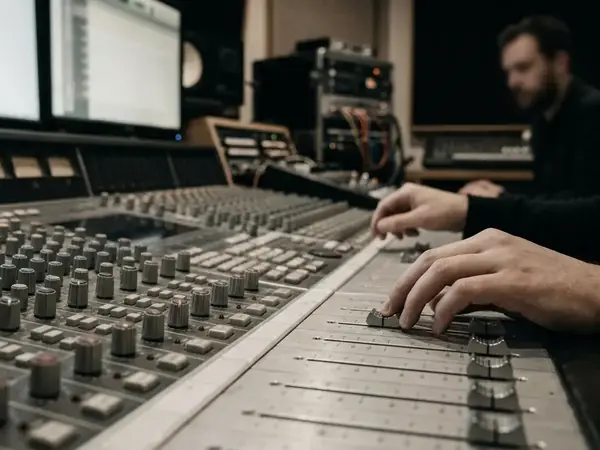
The Acoustic Challenge of the Solo Cello
Picture a lone cellist on a dimly lit stage, the instrument resting against them. The silence before the first bow stroke carries a heavy anticipation. Unaccompanied repertoire strips away the masking effects of a piano, orchestra, or continuo—it leaves nowhere to hide.
A modern cello’s open strings are normally tuned C2, G2, D3, and A3. This places its lowest fundamental at roughly 65 Hz before room gain and body resonance are considered. Capturing this instrument is a formidable task. Useful solo-cello capture often has to preserve information from low-body resonance around the C string up through bow noise, fingerboard articulation, and upper harmonics that extend well above the written pitch.
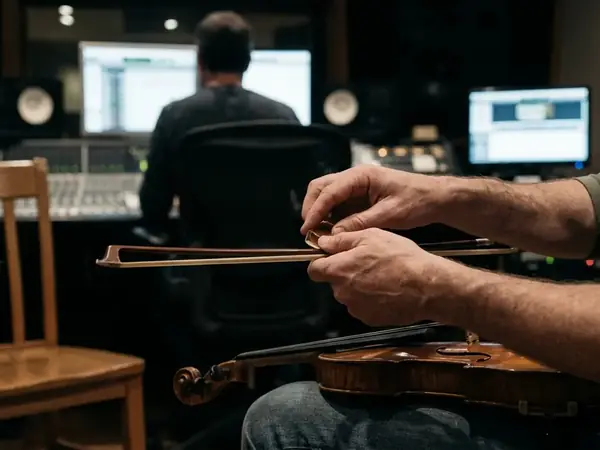
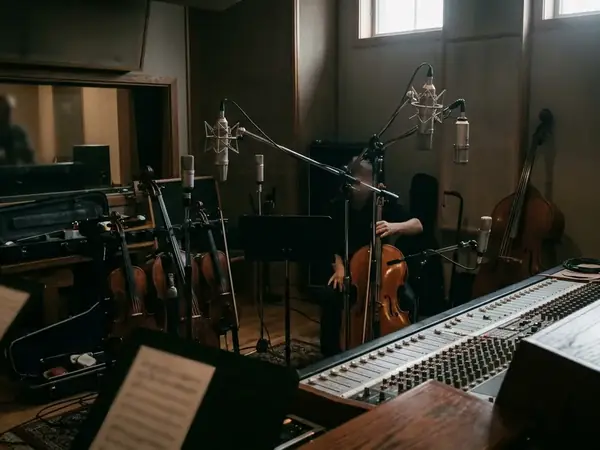
For a natural solo-cello image, a main pair commonly starts in the roughly 1-2.5 meter distance range. Closer placement increases rosin, bridge bite, and left-hand noise, while greater distance makes room decay part of the performance. Finding the optimal balance is what transforms a simple document of a performance into a true audiophile experience.
Criteria for Selection: Performance and Fidelity
We weigh interpretation and engineering together rather than treating recording quality as mere decoration. Proven performance criteria include stable pitch in exposed double-stops, audible separation of implied voices, controlled bow changes at phrase endings, and dynamic gradation from near-silent attacks to full C-string projection. Artists like Nathaniel Rosen have demonstrated how mastering these technical demands allows the emotional core of the music to surface.
Recording criteria are equally stringent. You need room decay that supports sustained notes without blurring fast passagework. Microphone placement must avoid exaggerated bridge glare. Mastering that flattens transient contrasts in pizzicato or heavy accented bowing ruins the illusion of reality.
Collaborative testing revealed distinct preferences in equipment choices. Vintage ribbon microphones can soften upper bow edge and emphasize body warmth. Modern small- or large-diaphragm condensers usually provide faster transient detail and more explicit room information. The choice often depends on the repertoire being recorded.
1. J.S. Bach: Six Suites for Unaccompanied Cello
The Bach Suites serve as the reference grammar for almost every later solo-cello work. Dance rhythm, implied counterpoint, register contrast, and rhetorical pacing are all present here. The six suites are catalogued as BWV 1007-1012 and are commonly linked to Bach’s Cöthen period, roughly 1717-1723.
Each suite follows a dance-based plan centered on prelude, allemande, courante, sarabande, two galanteries, and gigue. The Fifth Suite uses scordatura, and the Sixth Suite is often associated with a five-string instrument. While violinists like Arturo Delmoni have explored similar unaccompanied terrain, the cello suites remain the foundational text for low strings.
Historically informed readings often use gut strings, lower-tension response, and lighter articulation. Modern readings usually favor steel strings, broader sustain, and a more continuous legato line. A common mistake in evaluating these recordings is ignoring the acoustic context. The same Bach suite may benefit from a resonant acoustic in a slow, rhetorical reading and from a drier room in a fast, dance-driven reading where rhythmic edges must remain clean.
Quick Tip: Listen for the implied counterpoint in the preludes to gauge how well the recording resolves distinct voices without muddying the lower registers.
2. Zoltán Kodály: Sonata for Solo Cello, Op. 8
Kodály expands the solo-cello idea from implied polyphony into a near-orchestral sound world. The sheer physical force required to play it leaves audiences breathless. Kodály’s Sonata for Solo Cello, Op. 8 was composed in 1915 and is structured in three movements.
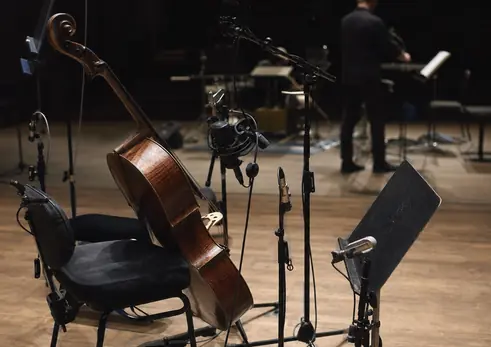
The decisive evidence of its ambition is scordatura. The tuning lowers the two bottom strings from C-G to B-F-sharp while retaining D and A above, giving the instrument the scordatura set B1, F-sharp2, D3, A3. This altered tuning is not a novelty; it fundamentally changes the resonance of the instrument.
The work asks the recording to handle hard pizzicato, explosive accents, rapid string crossings, and wide registral jumps without turning the cello into a congested midrange source. It is a guaranteed stress test for any playback system's dynamic range.
3. Benjamin Britten: Cello Suites Nos. 1-3
Britten’s suites operate as a dialogue with Bach rather than as abstract modern pieces. They were written for a specific virtuoso personality, Mstislav Rostropovich. Britten’s three solo cello suites are Suite No. 1, Op. 72 from 1964, Suite No. 2, Op. 80 from 1967, and Suite No. 3, Op. 87 from 1971.
The suites use recurring motto material, stark registral contrasts, left-hand intensity, and movements that often feel like fragments of ritual, lament, or private speech. The spatial characteristics of the recording venue play a crucial role here.
A venue with moderate decay can help Britten’s silences register as tension. A very dry studio can expose structure and bow articulation but may reduce the spectral halo around isolated notes. Choosing the right acoustic environment is essential to capturing the psychological depth of these compositions.
4. Paul Hindemith: Sonata for Solo Cello, Op. 25 No. 3
Hindemith earns a separate place because his solo writing tests linear clarity rather than lush resonance. Hindemith’s Sonata for Solo Cello, Op. 25 No. 3 dates from 1922 and is cast in five compact movements. It stands as a structural marvel of the modernist era.
The fourth movement is famously marked with an extremely fast, driven character, making articulation and transient precision central to both performance and capture. You need a highly transparent, uncolored recording chain to accurately reproduce Hindemith's dense harmonic language.
A transparent recording chain is especially important because added mid-bass warmth can thicken Hindemith’s close intervals, while excessive presence-region boost can make the line sound brittle rather than severe.
Scope and Limitations of Reference Recordings
We must resist the audiophile habit of treating one pressing, transfer, or microphone perspective as universally final. We have observed how acoustic limitations permanently color the captured performance.
Church and chapel recordings may give sustained Bach sarabandes a long vocal tail but can smear fast Kodály or Hindemith passagework if decay dominates the direct sound. Dry studio recordings can clarify left-hand shifts, bow articulation, and contrapuntal lines, yet may underrepresent the physical bloom a listener hears several rows back in a recital space.
On high-resolution playback systems, differences of microphone distance, room decay, and mastering level become easier to hear than on compact wireless or nearfield desktop setups. A close, highly detailed solo-cello recording can fail as a reference if it exaggerates rosin scrape and finger noise until the instrument sounds larger than life but musically flattened.
Note: A reference recording for system evaluation is not automatically the most moving interpretation for every listener.
Listening Context: The strongest recording is always a delicate balance of historical context, artistic intent, and playback system matching.