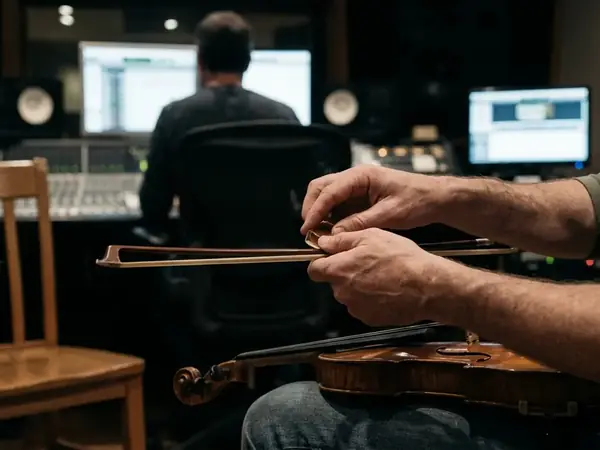
High-resolution playback begins with a modest premise: a string recording is not a trophy for expensive equipment. It is an acoustic event that has to survive capture, mastering, storage, room behavior, and transducer motion before it reaches the listener.
In this Article
- The Challenge of High-Fidelity String Reproduction
- Analyzing the Recording and Mastering Chain
- Room Acoustics: The First Component of Playback
- Selecting and Configuring Your Playback Gear
- Managing Uncompressed High-Resolution Audio Files
- Technological Scope and Timeless Audio Principles
The Challenge of High-Fidelity String Reproduction
A well-recorded violin does not sit politely inside a frequency chart. It flashes, blooms, scratches, sings, and changes color with pressure from the bow. Arturo Delmoni’s violin can move from a clean G-string fundamental to upper harmonics that catch the hall air, and the playback system has to keep both events in proportion.
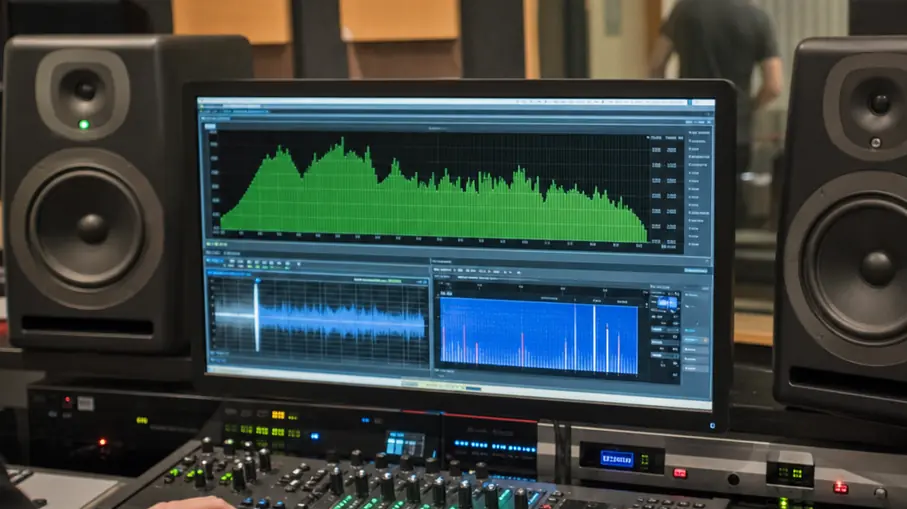
The practical musical fundamentals of the violin begin with G3 at 196 Hz and move upward, yet the audible character of a bowed string depends heavily on harmonics, bow noise, and ambient energy that can extend well past 10 kHz on revealing recordings. The most common error is not a lack of bass. It is a hardened upper-midrange between roughly 2 kHz and 5 kHz, where violin presence and listener fatigue occupy the same narrow territory.
From concert hall distance to domestic listening distance
In a hall, the listener hears direct sound, early reflections, late decay, and the size of the room. At home, the chair may sit only 2 to 3 meters from the loudspeakers. That close position compresses an event that may have been captured from several meters away, with strong early reflections and long decays folded into the recording.
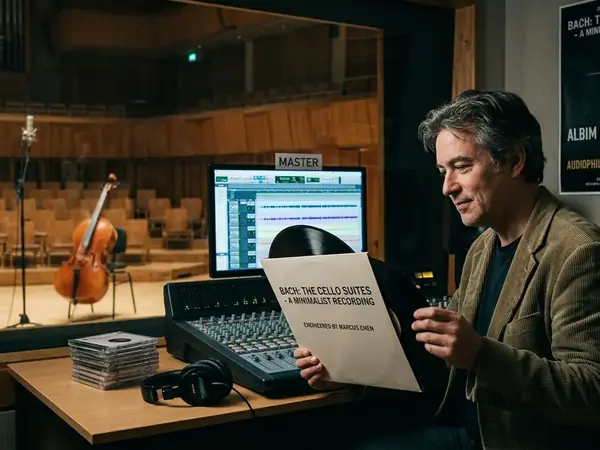
The emotional result is easy to identify. The listener hears beauty first — then the equipment exposes itself if the upper register turns glassy or the cello loses body. Nathaniel Rosen’s cello, for example, needs the resonant wood, the bow’s grip, and the surrounding air to arrive together. If the room or system separates those elements, the performance sounds edited even when the file is intact.
Summary: Treat string playback as acoustic reconstruction, not gear ranking. Preserving the original performance means avoiding unnecessary equalization, compression, and spotlight editing unless they correct a documented capture problem.
Analyzing the Recording and Mastering Chain
The recording chain starts before a converter sees a single bit. It begins with microphone geometry.
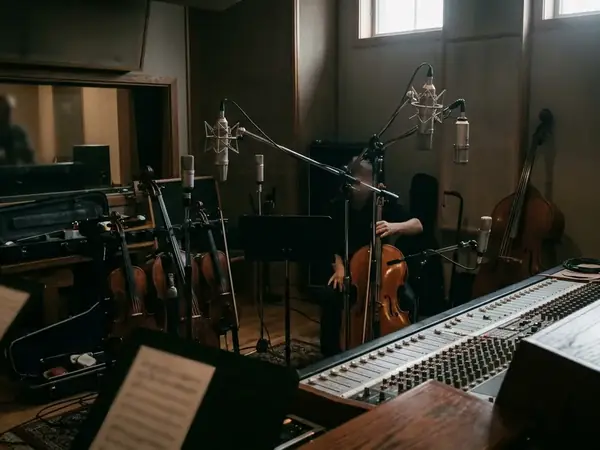
John Marks Records has long treated microphone placement as a musical decision rather than a technical afterthought. A Schoeps KFM 6 stereo sphere microphone fits that philosophy because it records level and time differences in a way that can preserve a believable acoustic picture. Based on creative process, a practical placement for a string ensemble begins 2 to 4 meters in front of the players and roughly 2 to 3 meters above the floor. The meaningful work happens next: the engineer adjusts in 20 to 40 centimeter increments after listening for hall balance, image width, and string tone.
Capture, mastering, and word-length reduction
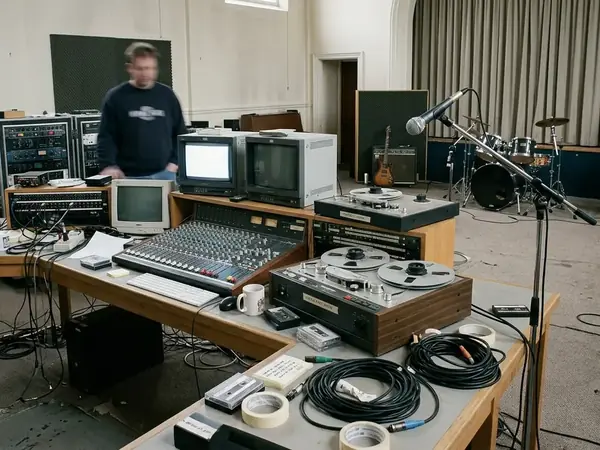
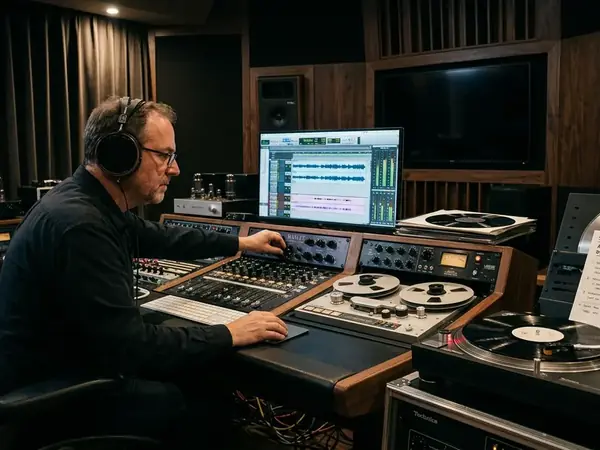
A Nagra D digital tape recorder belongs to a particular era of high-end production, but its role is still instructive. It made the capture stage serious, stable, and repeatable. Recording engineer Jerry Bruck of Posthorn Recordings and mastering engineer Robert C. Ludwig of Gateway Mastering represent the kind of specialized roles that matter in this chain: one protects the acoustic event at the session, the other prepares it for release without stripping away its proportions.
Red Book CD delivery is fixed at 16-bit, 44.1 kHz PCM. If the production source is 20-bit or 24-bit, the final disc master must be noise-shaped or dithered when reduced for manufacture. Dither belongs at the last irreversible word-length reduction, not before equalization, level changes, or fade construction. Put it too early and later processing changes the statistical relationship it was meant to protect.
HDCD-compatible encoding adds another historical wrinkle. It stores control information inside a standard 16-bit PCM stream, so a normal CD player can read the disc while a compatible decoder applies the intended expansion behavior. That design made sense in a CD-centered listening world; its lesson is broader than the format. Compatibility should not require audible damage to the musical signal.
Note: A disc or file cannot recover ambience that was never captured. The playback system’s task is to avoid losing what the recording and mastering chain already preserved.
Room Acoustics: The First Component of Playback
The room changes the signal after every upstream component has done its job. That is why a DAC with an impressive architecture can still sound brittle if the room has untreated sidewall reflections in the 2 kHz to 5 kHz presence region.
Start with the listening triangle, not the shopping list.
Build the listening triangle
- Place the left and right loudspeakers about 2 to just under 3 meters apart.
- Set the listening seat so each speaker is the same distance from the listener, within a tolerance of 5 to 10 centimeters.
- Move the loudspeakers away from the front wall in 10 centimeter steps, commonly testing the 60 to 110 centimeter range.
- Use cello-body thickness and violin image stability as the listening checks. Rosen’s cello should not thin out when the violin becomes vivid.
Control reflections before chasing components
RPG Skylines acoustical treatment works as diffusion rather than simple absorption. Its value lies in scattering reflected energy so the room keeps life without producing hard image smear. In a domestic room, absorptive treatment at sidewall mirror points should be centered near seated ear height, usually 90 to 110 centimeters from the floor.
Diffusion behind the listener works best when there is at least 1 meter between the listener’s ears and the rear wall. At shorter distances, shallow absorption usually produces cleaner imaging. This is not glamorous work, but it is audible within minutes when a violin image stops clinging to one loudspeaker and returns to the center space.
Quick Tip: If the system sounds bright only on violin peaks, clap once from the listening seat. A sharp sidewall slap often points to the treatment location more clearly than another cable swap.
Selecting and Configuring Your Playback Gear
Gear selection should move from the source outward because early errors get enlarged later. This approach favors compatibility, level discipline, and load matching over fashion.
Source and conversion
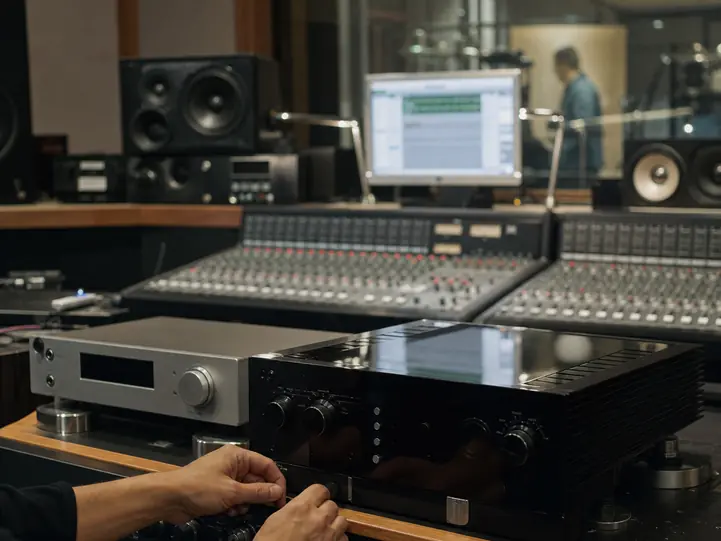
A dual-differential DAC architecture, as found in units such as the Enlightened Audio Designs Ultradisc 2000, is useful when paired conversion stages improve noise behavior and channel precision. The topology alone does not guarantee musicality, but it can support stable imaging when the rest of the design is carefully executed.
For digital transport into an external DAC, use true 75-ohm coaxial S/PDIF or 110-ohm balanced AES-style cabling rather than generic interconnects when runs exceed about 1.5 meters. The point is not mystique. It is impedance control, especially when a transport and DAC are asked to keep timing behavior predictable.
Amplification and transducers
Class A/B circuit design remains a practical match for demanding string playback. A Plinius 8150 integrated amplifier, for example, reflects the appeal of an integrated unit with current delivery, tonal density, and fewer box-to-box variables. Allow a Class A/B integrated amplifier 20 to 45 minutes of powered warm-up before judging tonal balance; string texture exposes premature conclusions quickly.
Headphone matching requires the same discipline. For conventional dynamic headphones, keep amplifier output impedance below one-eighth of the headphone impedance. For a 300-ohm headphone, that means below 37.5 ohms. Electrostatic headphones take a different route: they can reveal bow texture exceptionally well, but they require a dedicated energizing amplifier. Common pro-bias systems use a 580 V bias supply and cannot be driven from an ordinary headphone jack.
For listeners who value air, transient speed, and inner bow detail, high-end Sennheiser electrostatic driver technology can be deeply persuasive. For listeners who want easier system integration and stronger amplifier choice, dynamic headphones may fit better. The more refined choice is the one that behaves correctly in the actual system.
- Confirm the file or disc format.
- Select the DAC input and output level.
- Verify amplifier input headroom.
- Match amplifier output to the transducer load.
- Set listening level using the loudest string climaxes rather than quiet passages.
Managing Uncompressed High-Resolution Audio Files
File handling should be reversible and auditable. Pulse-Code Modulation, or PCM, stores amplitude samples directly without perceptual coding, which makes WAV a practical preservation format for uncompressed audio.
The size of these files is not incidental. A stereo 16-bit, 44.1 kHz WAV file uses 176,400 bytes per second, roughly 10 MiB per minute. A stereo 24-bit, 96 kHz WAV file uses 576,000 bytes per second, roughly 33 MiB per minute. A 60-minute stereo 24-bit, 96 kHz program occupies roughly 2 GiB before ZIP packaging.
Playback setup checklist for high-resolution string recordings
- Confirm the source format: CD-quality 16-bit/44.1 kHz PCM or high-resolution WAV such as 24-bit/96 kHz.
- Extract any ZIP archive before playback and retain the original archive for verification.
- Keep the original archive, extracted WAV files, cover image or booklet PDF, and any checksum text in the same album folder.
- Disable volume normalization, crossfade, sample-rate conversion, and system-wide sound effects.
- Set the output device to the file’s native sample rate before listening.
A high-resolution WAV file will not improve playback if the operating system silently converts it to a different sample rate before output. Bit-perfect playback is not romantic language; it is a practical condition in which the file reaches the DAC without avoidable alteration.
Important context: ZIP compression is acceptable for delivery because it is lossless. The archive must be extracted before playback so the audio player reads the WAV files directly.
Technological Scope and Timeless Audio Principles
The John Marks Records catalog belongs to a defined production history. The relevant archival window runs from 1992 to 2014, and many equipment references reflect the CD-centered playback assumptions common before 2006. That context matters.
Legacy disc transports, early high-end DACs, and HDCD-aware players should be read as production-context clues, not as a requirement to buy discontinued components. Modern replacements include asynchronous USB, network audio bridges, and dedicated streamers. The downstream requirements remain stable: low noise, correct level matching, and no unintended sample-rate conversion.
What remains durable
Class A/B amplification remains relevant because it addresses electrical load behavior. Electrostatic transduction remains relevant because diaphragm acceleration still affects transient clarity. Acoustic diffusion remains relevant because room energy distribution has not become obsolete.
For a modern archive workflow, keep at least two local copies on separate drives and one off-site or cloud copy, refreshing storage media on a 4-to-6-year cycle. This practice protects access without confusing storage management with sound quality.
Within the limits of legacy catalog playback, the strongest systems still follow the same order of operations: preserve the file or disc, control the room, match the electronics, and listen to real musical stress points. A violin peak should stay luminous without turning hard. A cello should keep wood, string, and air in one gesture. When that happens, the equipment has done something difficult: it has stepped back from the performance.