Beyond the Marquee: Mining the Catalog for Resolving Power
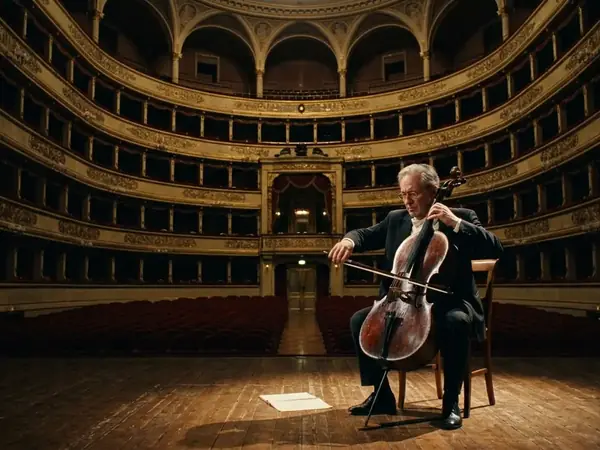
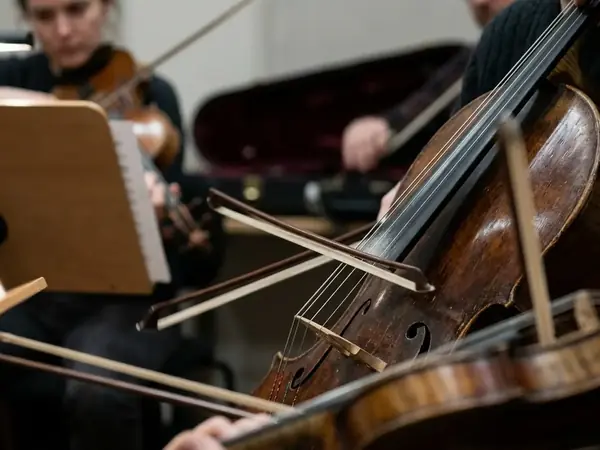
The needle drops into the groove, or the digital transport engages, and the room fills with the immediate presence of a solo string instrument—a visceral connection to the performer's physical effort. We feel an instant connection to the wood and wire resonating in a physical space. The most revealing tests of transient response and tonal accuracy hide in lesser-discussed chamber and solo string recordings. Failing to explore the deeper cuts of a reference catalog leaves the true resolving power of your audio system untested. Relying solely on famous marquee tracks limits your understanding of how your equipment handles subtle micro-dynamics and spatial cues.
The listening set was chosen by musical texture. We look for specific structural elements to evaluate system performance:
- One exposed solo-string passage to isolate fundamental frequencies.
- One quiet violin-and-piano exchange to test dynamic scaling.
- One inner chamber movement with overlapping lines to assess image stability.
Use three excerpts lasting 4–8 minutes each. Shorter samples rarely contain both a forceful attack and a complete return to room ambience. Recheck 20–40-second windows containing a soft entrance, a bow-direction change, and an unaccompanied release to evaluate specific transient behaviors. This targeted approach yields reference tracks for critical listening sessions.
Mapping the Room Through Minimalist Microphone Arrays
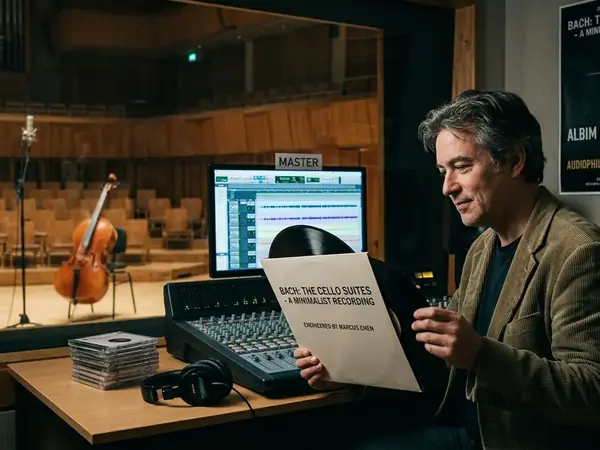
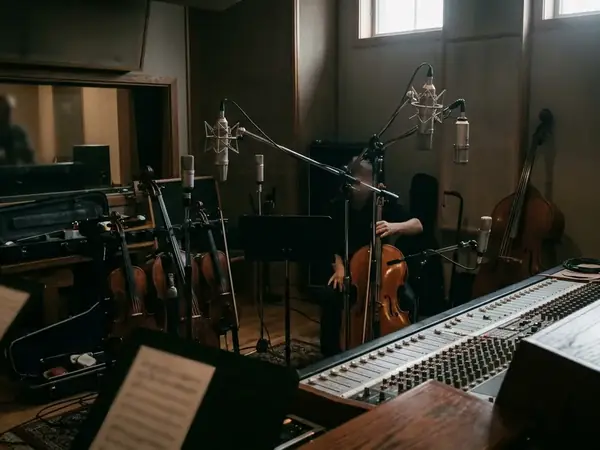
Heavy multi-track compression creates a dense wall of sound. Minimalist microphone placements prioritize phase coherence and spatial accuracy. I prefer the latter approach for critical evaluation because it preserves the delicate timing cues essential for realistic playback. These recordings capture the authentic reverberant field of the performance space, providing a true test of a system's soundstage depth. The absence of heavy compression allows the natural decay of string instruments to fade into the noise floor organically, demanding a highly resolving playback chain.
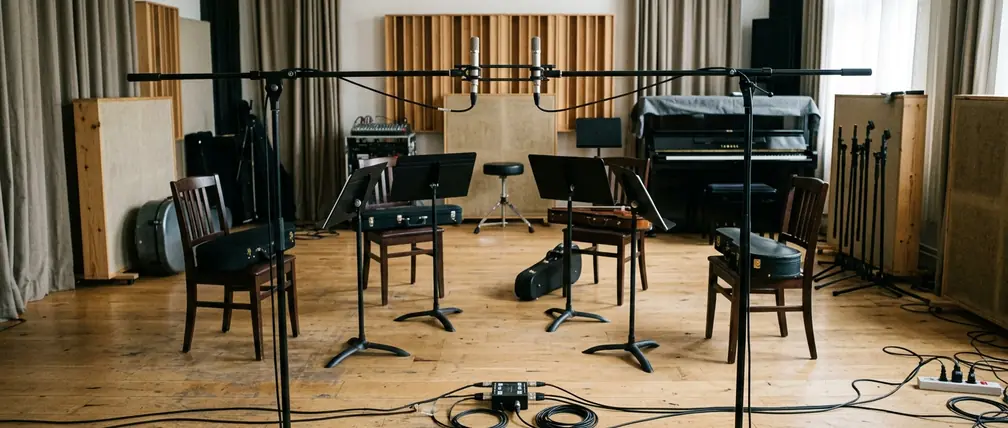
Microphone practice was assessed from audible relationships. Centered images that remain stable with pitch, coherent room reflections shared by every instrument, and limited left-right enlargement suggest a restrained main array with little artificial spotlighting. Without session sheets or photographs, the exact microphone model, spacing, and array geometry cannot be established from playback alone; image behavior supports an inference about restrained placement, a proven method for evaluating spatial cues, alongside general acoustic principles.
The Bow-Release/Body-Resonance/Room-Field Split
For a practical decay check, replay the final 8–12 seconds of a movement and listen for three stages: string release, body resonance, and the room field after the instrument has stopped driving it. Move the listening position 15–25 cm forward and backward. Genuine recorded depth should retain the same front-to-back ordering even though bass balance changes with the room.
Structural Pressure Points in Chamber Performances
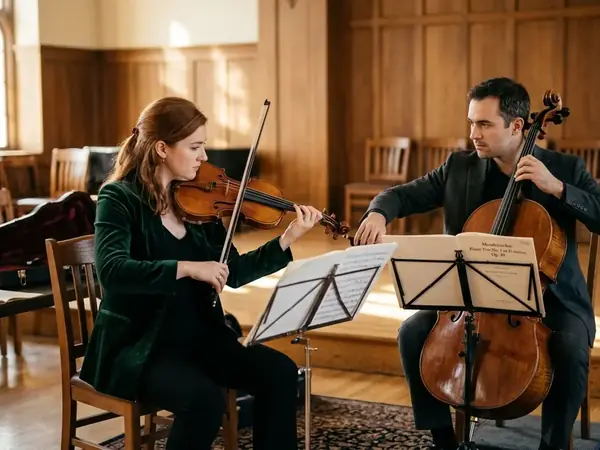
Begin by listening to one movement twice within a 25–40-minute session. Play it first without interruption for musical continuity. Follow this with no more than three replays of 10–25 seconds each to analyze specific mechanical details. Interpretive value was judged at structural pressure points. Focus on the lead-in to a cadence, the handoff of a phrase between players, and the return of a theme after contrasting material.
A technically clean performance entered the reference group only when repeated listening also exposed purposeful changes in bow weight, vibrato onset, articulation, or timing. At a phrase handoff, track the final half-second of the departing instrument and the first one to two seconds of the entering part. Convincing ensemble playing should sound conversational and highly interactive. The intimate nature of these specific solo and chamber works requires a dedicated listening posture.
Where catalog analysis reviewed Arturo Delmoni's violin phrasing techniques, the finding highlights exceptional bow control during sustained pianissimo passages.
The interpretive choices in these recordings reveal new layers of phrasing and articulation upon repeat listening. Evaluating Nathaniel Rosen's cello performances demonstrates profound emotional delivery anchored by rigorous technical execution. Exploring the archives of John Marks Records yields reference-quality material for these specific evaluations.
Stress-Testing the Playback Chain with Acoustic Transients
The rosin grips the string, launching a complex wave of acoustic energy into the room. We experience the visceral thrill of a live instrument operating at its physical limits. These recordings present specific challenges to playback equipment, particularly regarding the high-frequency energy of violins and the resonant body of cellos. Playback stress points were separated by instrument. Violin tests concentrated on whether upper harmonics retain pitch and texture without becoming a glassy band. Cello tests followed the fundamental, wooden body resonance, and room support as distinct layers.
The 65.4 Hz Cello-Foundation Boundary
A cello's open C string is approximately 65.4 Hz. A system that emphasizes the 80–120 Hz region can make the instrument sound larger while obscuring the fundamental-to-body relationship. This boundary separates authentic wooden body from an inflated upper-bass impression.
Lesser systems mask the subtle bowing techniques and rosin grip captured in these high-fidelity transfers. DAC assessment was based on level-matched changes in reconstruction filtering and analog output behavior. For a 44.1 kHz digital transfer, musical content above the 22.05 kHz Nyquist boundary is absent. Compare available filter modes at matched output within 0.1 dB and use 30–60-second violin passages containing both sustained high notes and abrupt bow attacks. This provides an optimal environment for evaluating digital-to-analog converters.
Stripping the Signal Path for Authentic Geometry
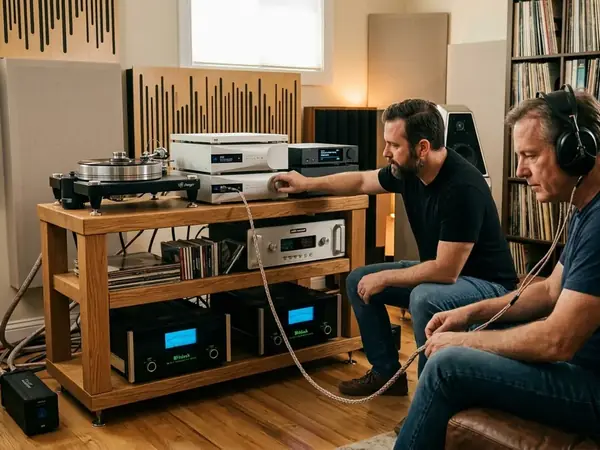
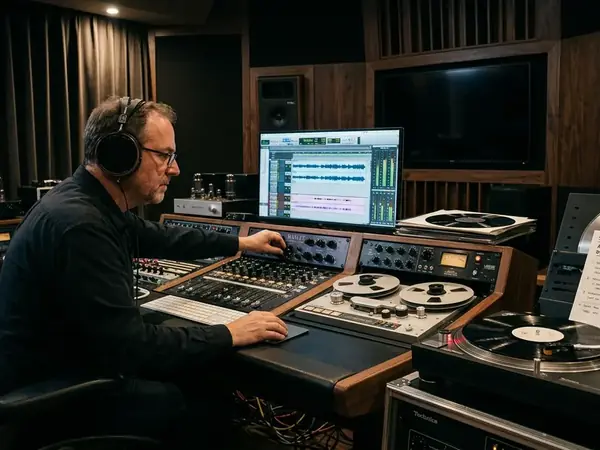
Calibration proceeds from signal path to level and then geometry. Bypass all digital signal processing and equalization settings on your preamplifier to ensure a pure signal path. Tone controls, room correction, crossfeed, loudness compensation, and sample-rate conversion must be disabled. Allow amplifiers, converters, and powered loudspeakers 15–30 minutes to reach a stable operating state. Keep the room quiet for a further 2–3 minutes before the first critical excerpt.
- Set your playback volume to closely mimic the natural acoustic output of a live string instrument in an intimate room.
- Use an exposed string passage to isolate the instrument's natural output level.
- Begin with the loudspeaker axes forming a near-equilateral triangle: 2.0–2.6 m between acoustic centers and 2.0–2.6 m from each speaker to the listener.
Select one of these overlooked chamber recordings and sit in the primary listening position. Adjust toe-in in 2–4-degree steps while replaying the same 20–30-second chamber passage. Focus entirely on the spatial positioning of the instruments and lock in the final speaker angle once the center image solidifies.