In this Article
- Defining the True Audiophile Reissue
- The Sonic Benchmarks: 7 Essential Classical Reissues
- Integrating Reference Recordings Into Your Listening Sessions
Defining the True Audiophile Reissue
An audiophile classical reissue is a recording transferred directly from the original analog master tapes with minimal intervention, specifically engineered to preserve the dynamic range, spatial cues, and harmonic overtones of the original acoustic performance.
That definition begins with provenance. Price, vinyl weight, elaborate packaging, and limited-edition numbering come later. The phrase “from the master tapes” remains too imprecise on its own: it may describe an original session master, an equalized production copy, a safety copy, or an undisclosed digital file.
This distinction matters because a heavy, quiet pressing can still sound constrained when its source has been compressed or heavily filtered. Low surface noise confirms competent manufacture; it does not establish an original-tape transfer. Classical recordings expose the difference quickly. Compression flattens orchestral scale, aggressive noise reduction shortens reverberation, and poorly judged equalization turns violin overtones brittle.
Tape Before Weight
Screen each edition in this order: source provenance, transfer or cutting chain, physical manufacture, then musical significance. This sequence prevents an opaque digital remaster on 180-gram vinyl from passing as an archival release.
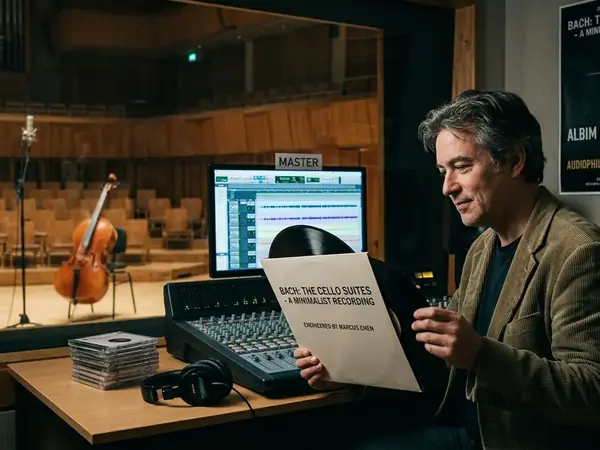
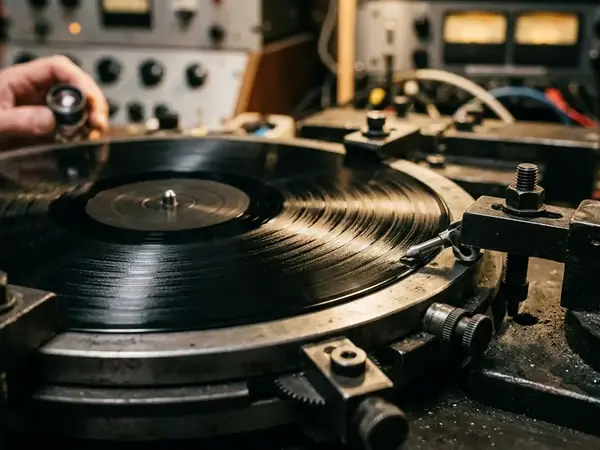
For vinyl, collectors should inspect runout identifiers, confirm the named mastering engineer or facility, and play at least one complete side. The first minute may be quiet while inner grooves reveal mistracking, cutting compromises, or poor centering. SACD editions deserve the same scrutiny: a direct-to-DSD transfer carries more evidentiary value than a broad claim of digital restoration.
The selections below prioritize a transparent chain, high-quality physical media, and performances whose musical and recording significance rewards close listening.
The Sonic Benchmarks: 7 Essential Classical Reissues
These choices expose distinct parts of a playback chain rather than reward scarcity. Five are specific recorded benchmarks. The final two define provenance-led places for Arturo Delmoni and Nathaniel Rosen within a serious reference library.
-
Reiner and Chicago Symphony: Strauss, Also sprach Zarathustra
The Analogue Productions reissue captures the scale associated with RCA Living Stereo microphone placement. Reiner and the Chicago Symphony recorded the work in Orchestra Hall in March 1954, during the early stereo era.
The opening organ-and-orchestra rise begins near silence and expands into a severe systems test. Woofer overhang blurs the foundation; amplifier clipping hardens the peak; weak channel stability causes the image to collapse as the texture grows. A capable setup preserves both weight and the physical dimensions of the orchestra.
-
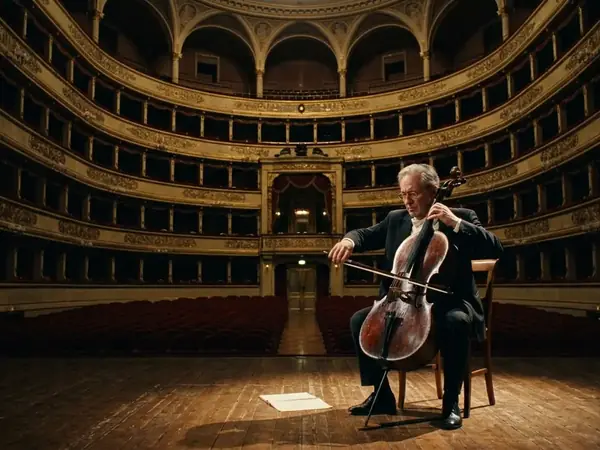
Janos Starker: Bach, Cello Suites
The Speakers Corner edition places the listener close to Starker’s instrument while retaining the room around it. The complete suites were taped in two groups, in 1963 and 1965, and originally filled three LPs.
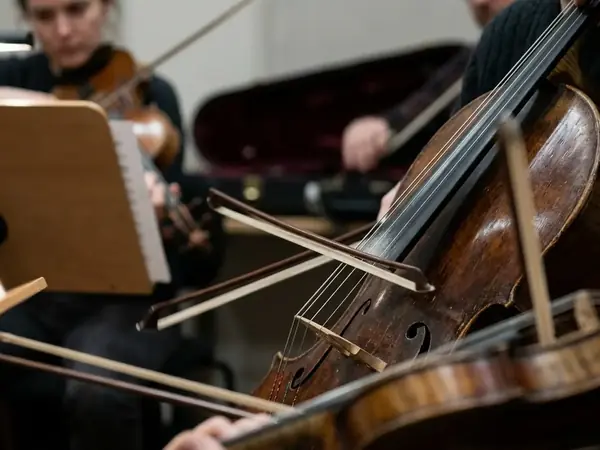
Solo cello makes concealment difficult. Bow pressure, low-level decays, edits, excessive hiss removal, and truncated reverberation stand exposed. The finest passages combine intimate micro-dynamics with an acoustic tail that remains audible after the string stops speaking.
-
Kleiber and Vienna Philharmonic: Beethoven Fifth and Seventh
Sessions from 1974 and 1975–1976 produced a demanding test of speed and organization. Rapid string attacks should begin together, while tightly synchronized accents must retain their shape through orchestral peaks. Congestion points toward cartridge alignment, DAC reconstruction, or limited headroom rather than toward the density of Beethoven’s writing alone.
-
Oistrakh and London Symphony: Bruch, Scottish Fantasy
Recorded in 1962, this performance tests instrumental scale and front-to-back placement. Its central three-microphone perspective should locate Oistrakh firmly ahead of the London Symphony Orchestra. An enlarged violin stretching across the room signals phase, channel-balance, or setup trouble. Correct reproduction gives the soloist presence without detaching him from the ensemble.
-
Du Pré, Barbirolli and London Symphony: Elgar Cello Concerto
Du Pré recorded the concerto in August 1965. A carefully cut, valve-mastered edition retains the grain of forceful bowing, breathing-level detail, and the orchestra’s dark color. It also reveals tonal imbalance: excessive upper-string energy becomes glare, while over-damping strips the cello of rosin, wood, and physical resistance.
-
Arturo Delmoni: A Provenance-Led Violin Edition
A verified Arturo Delmoni reissue belongs in the library for evaluating violin timbre. Admission should depend on disclosed source generation and transfer chain. The useful edition preserves the transition from fundamental tone to upper harmonics, keeps bow attacks clean, and allows hall reflections to develop without artificial brightness.
-
Nathaniel Rosen: A Provenance-Led Cello Edition
A Nathaniel Rosen cello reissue offers a complementary check on lower-string body and resonance. Select an edition only when its tape source, mastering path, and manufacture can be traced. Played beside Starker, it can help separate system character from the acoustic signature of one instrument, room, or production decision.
Integrating Reference Recordings Into Your Listening Sessions
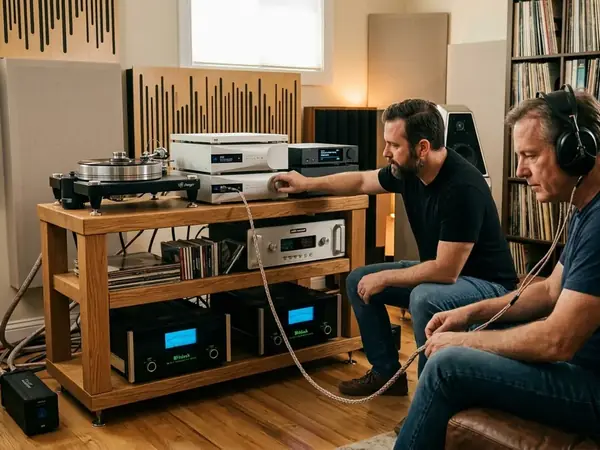
Reference listening needs a repeatable setup. Casual record switching encourages judgments based on level, memory, and fatigue rather than mastering differences.
- Prepare the chain. Warm the phono stage or DAC for 20 to 30 minutes, clean the stylus, and verify that the record sits concentrically.
- Hold level constant. Even a small perceived loudness advantage can make one edition seem more detailed or dynamic.
- Listen in short intervals. Use sessions of 8 to 12 minutes, followed by a 3 to 5 minute pause. This reduces auditory adaptation.
- Assign one task per recording. Use Starker for timbre and decay, Reiner for low-frequency control, Kleiber for transient response, and Oistrakh for image scale.
- Repeat the difficult passage. For an inner-groove check, confirm tracking force and anti-skate against the cartridge maker’s stated range. Never exceed that range as an experiment.
Depth Over Width
Judge soundstage depth through stable relationships among the soloist, front desks, winds, and rear brass. A center image that moves with pitch usually points to azimuth, channel balance, or room reflections.
These pressings may offer peak fidelity, yet their audible resolution remains bounded by the cartridge, phono stage, loudspeakers, room, or DAC. Surface noise, off-center spindle holes, and stylus mistracking can also make two copies of the same mastering sound materially different. Conclusions about one copy should therefore remain tied to its source generation, equalization, cutting level, centering, and condition.
John Marks Records, as a publishing label concerned with acoustic performance, is best served by this disciplined use of reference editions: each record should answer a defined engineering question.
Starker First
When only one release can enter the reference shelf, choose the Starker Bach Cello Suites. Its exposed micro-dynamics, natural reverberation, and intimate instrumental scale make it the decisive test of whether a system can reproduce acoustic realism.
Start with the Starker Bach Cello Suites and build every subsequent system comparison around that recording.