From Sonata-Room Balance to a Fixed Stereo Perspective
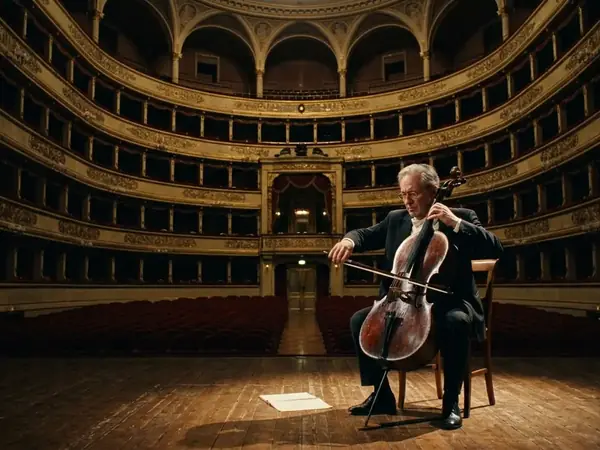
The piano in Beethoven’s and Brahms’s cello sonatas has too much structural responsibility to disappear behind a magnificent cello sound. Beethoven’s Op. 5 sonatas, dating from 1796, and Brahms’s E-minor Sonata, Op. 38, composed during 1862–1865, make balance a negotiation between independent voices. The keyboard carries argument, momentum and harmonic direction. A recording that reduces it to background sacrifices the music’s architecture.
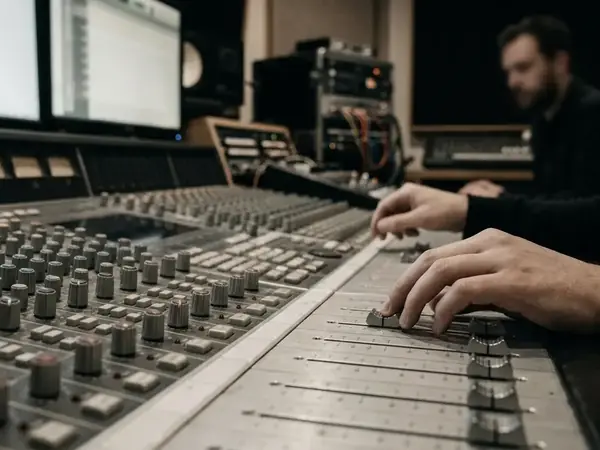
That partnership gives the nineteenth-century room its central importance: performers must establish a balance within a shared acoustic. Commercial stereo recording in the late 1950s introduced another decisive perspective. Microphone placement and channel balance could fix the ensemble’s apparent depth for repeated listening. A cello placed insistently forward stays there through every piano response.
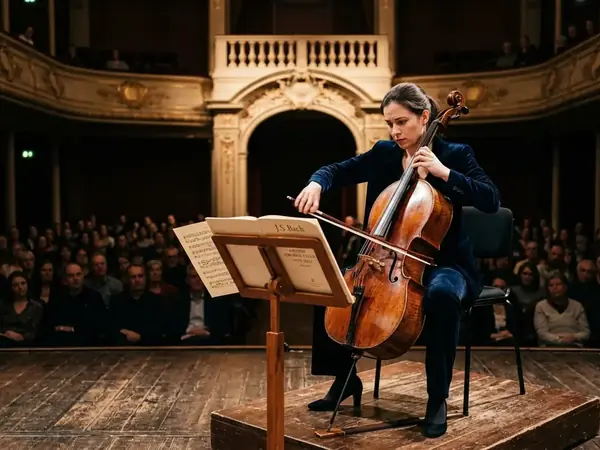
Projection cultivated for a concerto entrance serves a different purpose from chamber voicing. Carrying across an orchestra rewards a commanding attack and sustained presence. At close microphone range, that same emphasis can enlarge the cello until its partner seems recessed. Raw power then costs the ensemble depth.
A useful recording comparison starts with a 20–30-second passage containing a cello statement and a piano reply. Keep microphone position, preamplifier gain and playback level unchanged between takes. Compare piano bass-note identity, the audibility of an inner keyboard line and the cello’s apparent distance from the reverberant field. The stronger take gives both statements their full musical consequence.
Where Cello Sustain Covers the Piano’s Middle Register
The collision begins in the score. A sustained cello line occupies the same territory as moving left-hand notes or lower-middle piano chords; the pianist’s hammer attack survives, yet the harmony following it loses definition. Turning up the piano’s attack can make the entrance harder without restoring its disappearing decay.
At A4 = 440 Hz, the cello’s open G2 lies near 98.0 Hz and its open D3 near 146.8 Hz. Both sit comfortably within ordinary piano left-hand territory. A D3 cello tone also carries harmonic components near 293.7, 440.5 and 587.3 Hz. Its interaction with the keyboard extends well beyond a single bass frequency.
This is where attractive bloom can become mud. The initial piano note remains recognizable as an event, while its pitch, changing inner voices and resonant tail become difficult to follow beneath the cello’s sustained energy. A large cello image may sound impressive in isolation and obscure the very harmony that gives its phrase meaning.
Follow the Decay
Choose 2–4 bars with sustained cello beneath moving piano harmony. Follow the keyboard onset on one pass and its decay on the next. If the onset speaks clearly while the continuation disappears, reduce the cello’s sustained prominence before demanding a more forceful piano entrance.
Heavy vibrato used to maintain soloistic prominence can further draw attention toward the cello. A chamber partner shapes vibrato, sustain and phrase direction around the keyboard’s changing resonance. Transparency here means that the piano’s harmonic movement remains legible inside the combined sound.
Bow Speed and Contact Point Under Close Microphones
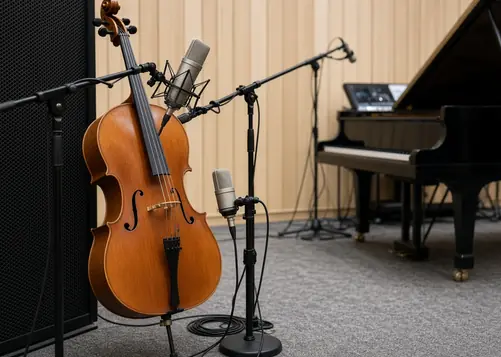
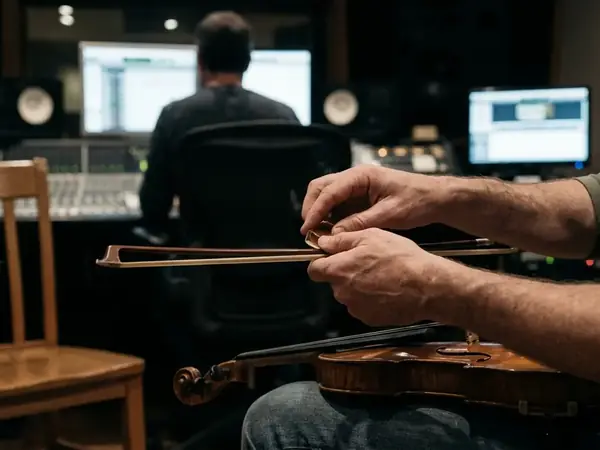
Close listening makes the grain of a bow stroke conspicuous: the catch of the hair, the start of the pitch and the texture that persists beneath it. Some friction gives articulation character. A crushed sustained note draws attention away from the phrase and toward the mechanism producing it.
Bow force, speed and contact point are coupled controls. Simply removing weight can leave an insecure tone; increasing speed without adjusting contact can change the intended dynamic. The useful comparison preserves a stable pitch centre while reducing intrusive friction.
- Sustain the same pitch on the same string for 6–8 seconds at the intended recording dynamic. Keep vibrato consistent.
- If the tone sounds crushed, release some vertical force and increase bow speed incrementally, maintaining reliable string engagement.
- Compare contact lanes near the bridge, midway toward the fingerboard and near the fingerboard edge. Listen for stability and colour at each position.
Moving toward the fingerboard for an accompanying figure can soften the tonal edge and create a warm cushion beneath a piano or violin melody. That colour needs an audible pitch centre. An airy surface that loses harmonic support weakens the accompaniment.
A concerto entrance may demand a sharply defined attack; an intimate duo often needs a tapered transfer between bow directions. Record a 4-bar accompanying figure and inspect each change for a friction accent, an unintended swell or a gap. The bow change should preserve the phrase’s breathing.
Shared Rubato Begins with the Cello’s Changing Job
A cello can support the bass, animate an inner line and receive the melody within a single passage. Giving that whole span one imposing tonal character flattens its internal drama. The expressive interest comes from the handover.
In a hypothetical rehearsal passage, mark the exact beat where each role changes. As the harmonic floor, the cello gives an arrival substance while preserving the other bass information. As an inner rhythmic voice, it carries motion through articulation. When the melody arrives, the sound can open into the foreground because the preceding texture has left room for it.
Shared rubato follows the same discipline. A pianist’s hammer drop and a violinist’s bow gesture give an ensemble different physical cues, yet the timing must join across them. An expressive hesitation imposed from the cello chair can detach a beautiful line from its harmonic destination.
Rehearse the arrival in a 2-bar loop that includes the preceding gesture and the following beat. The recovery matters: the ensemble must agree how the music resumes after yielding time. Listen for continuity through the hesitation, not merely a simultaneous landing.
Sustained tuning also shapes that continuity. Audible beating between nearby pitches can draw attention to unstable relationships within a chord. Small intonation adjustments against the sounding harmony, coupled with dynamic restraint, help the ensemble settle into a coherent resonance. On revealing playback, that agreement gives the bass line authority—without requiring it to dominate every phrase.
Choose Reference Recordings by Their Shared Decay
A convincing chamber recording lets the ear follow separate instrumental actions inside a common space. The piano retains a definite pitch beneath sustained cello; the cello’s release opens onto continuing resonance; neither instrument balloons forward whenever the dynamic rises. These cues deserve more weight than spectacular bow detail.
Keep the Listening Window Fixed
- Choose a 30–45-second passage containing a shared pitch or octave, an exposed piano decay and a cello release.
- Set a comfortable playback level and keep both volume and listening position fixed. Extra loudness can make cello prominence resemble extra detail.
- Follow the shared arrival first. Check whether distinct attacks develop into a coherent sustained harmony.
- Repeat the passage for the piano decay, then the cello release. Listen for identifiable keyboard pitch and continuous room sound.
- When comparing pressings, use the same performance and recording where available to keep the musical balance consistent.
A natural ensemble perspective preserves stable instrumental scale and connected decay through changes of register and intensity. An insistently spotlighted cello can pull attention away from that continuity, making the piano seem to occupy a separate depth. Playback alone cannot establish microphone count or placement, so judge the audible relationship rather than assigning a recording method by ear.
For a reference chamber library, prioritize recordings that convey true acoustic tandem: a cellist yielding dynamic headroom to shared overtones, a piano retaining its harmonic speech, and releases that belong to the same room. Choose that integrated perspective over the close-miked star vehicle.